
Home · Camper removal near me · California
Remove My Camper, powered by Arwood Site Services
California jobs split along geography that a single California page has to respect. A travel trailer in a tight Los Angeles driveway is a different access problem from a unit stored near the desert parks of San Diego County or a motorhome left in the Central Valley heat. Coastal salt air, mountain grades, and dense metro streets all change whether a truck can get in and back up to the camper — one of the two things we always need to know.
Remove My Camper works nationwide from Jacksonville, Florida. Send the California city or ZIP with your photos. There is no general free-removal offer.
There is no general free-removal offer. A camper in really good condition may qualify for free removal, but only case by case, and only after we review photos.
“If you don’t shop our prices, we both lose.”— John Arwood
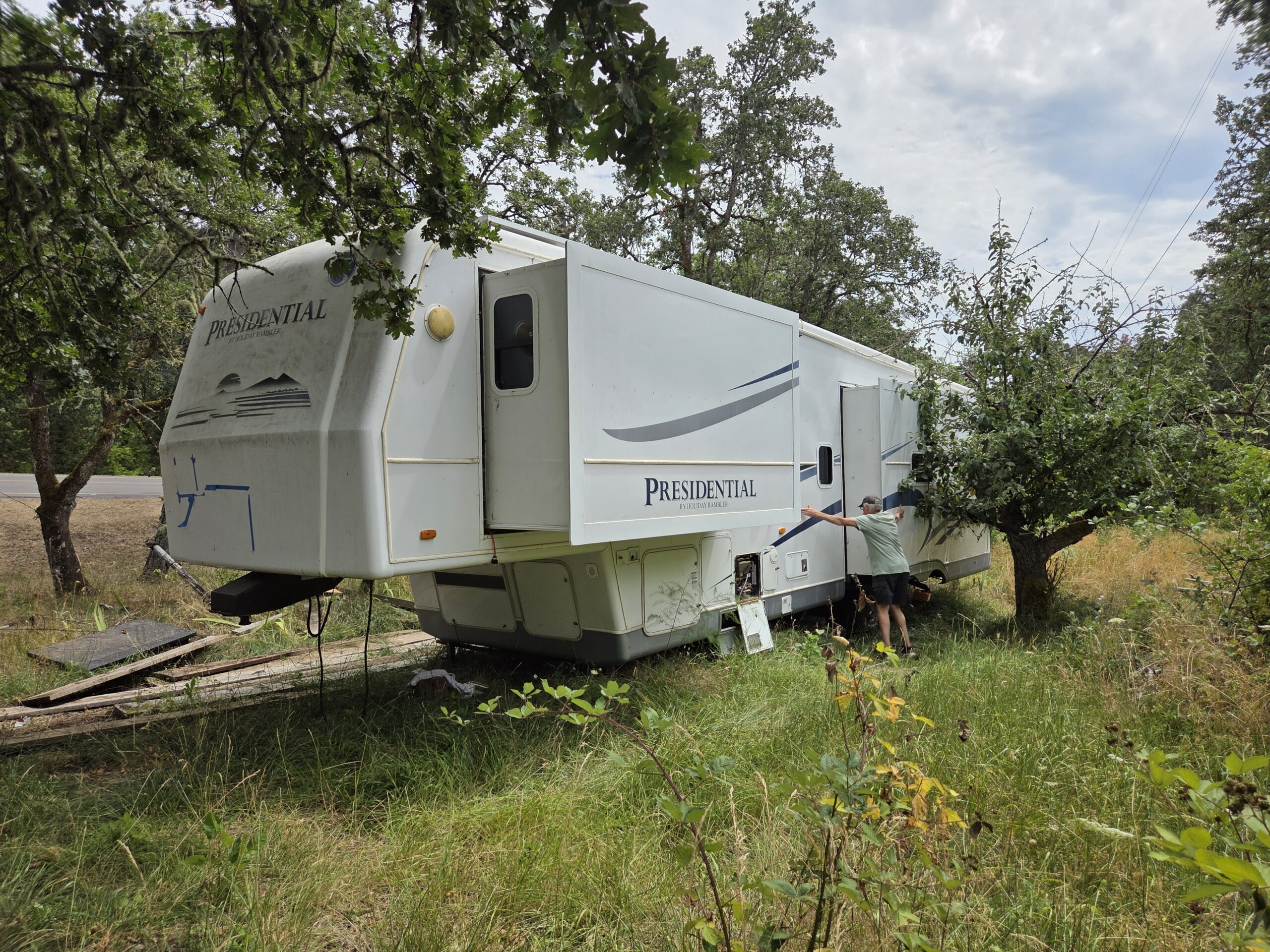
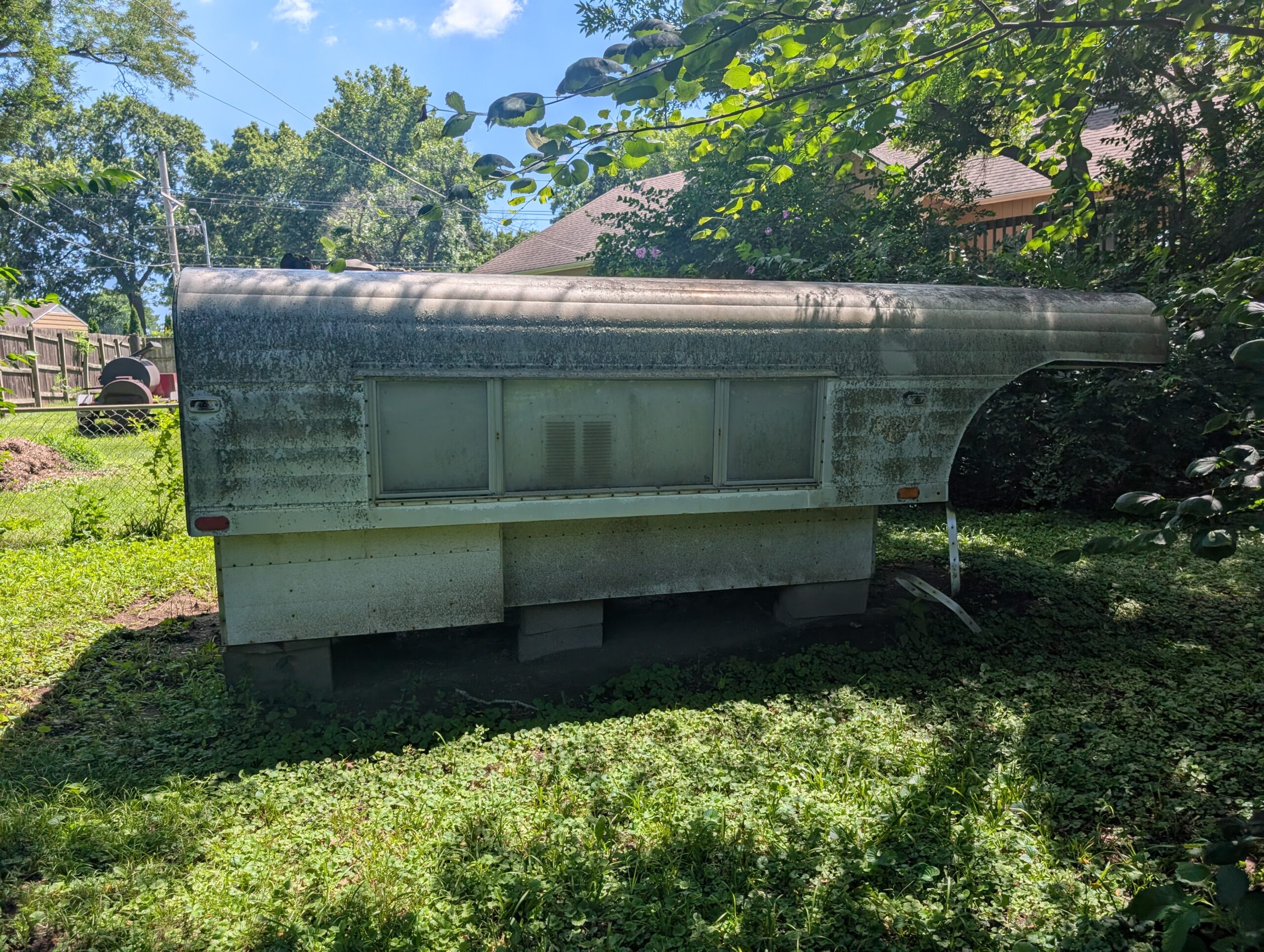
Two things we always need to know
These apply on every California job, whether the unit sits in a driveway, a park, or on acreage:
- Can a truck get access to back up to the camper? If a truck cannot get in and back up to it, the job usually takes more equipment and time.
- Do the tires hold air? Flat, dry-rotted, or missing tires often mean the unit cannot roll out on its own.
Tell us both when you request a quote, and show them in your photos. The calculator treats both as questions that affect the estimate. See the FAQ for more detail.
What we remove in California
Pop-up campers, drivable campers (Class A, B, and C motorhomes and truck campers), pull-behind travel trailers and fifth wheels, and single-wide or double-wide mobile homes. If a camper can be reused in certain applications, we reuse it. If it cannot, we recycle it. Mobile homes are usually taken apart on site.
We work on private land and in RV parks, campgrounds, and mobile home parks.
Title and registration in California
We are not your lawyer, and this is not legal advice. Title and registration rules change. Confirm the current requirement with the official agency before you assume a camper is or is not titled.
The California Department of Motor Vehicles registers and titles vehicles in the state. In its Vehicle Industry Registration Procedures Manual, DMV describes a recreational vehicle — citing Health and Safety Code section 18010 — as a motorhome, housecar, travel trailer, truck camper, or camp trailer, with or without motive power, designed for human habitation or other occupancy.
Motorhomes are titled as vehicles. Trailers and camp trailers have their own registration paths through DMV. We will not quote a fee schedule or a "you must title this" rule that we have not confirmed for your unit. If you have the title, say so when you request a quote. If you do not, say that too.
Official sources:
Abandoned campers and vehicles in California
Parks, landowners, and owners of a unit left behind often ask how “abandoned” works. The short version: it is a legal process, not something a removal company can declare on a website. Have your paperwork in order on your side. We will tell you what we need in order to schedule a removal.
California lets cities and counties adopt local ordinances for the abatement and removal of abandoned, wrecked, dismantled, or inoperative vehicles from private or public property. California DMV's manual (citing Vehicle Code sections 22660, 22661, and 22662) states that vehicles removed under a local ordinance must be disposed of to a licensed dismantler or scrap metal processor, and that a vehicle removed under a local abatement procedure generally cannot be titled or reregistered, with limited historical-plate exceptions.
A separate, narrower rule applies in some counties. Vehicle Code section 22851.5, as explained in a California DMV industry notice dated December 31, 2025, authorizes law-enforcement agencies in Alameda and Los Angeles Counties, effective January 1, 2026, to use a process for certain abandoned, wrecked, dismantled, or inoperative recreational vehicles valued at $4,000 or less (form REG 462 AL). That county process is not a statewide rule and should not be assumed in San Diego, the Central Valley, or elsewhere.
Local law enforcement and the official DMV and Vehicle Code texts are the sources to follow. We remove a unit when you have the right to release it; we do not run an abatement case for you.
Official sources:
Camping and RV-park regions
California State Parks is the official state-parks agency. RV camping is spread from coastal parks to desert units such as Anza-Borrego Desert State Park, and from mountain highways to Central Valley fairgrounds and private parks. Regions we use when planning a removal conversation are listed below.
- Los Angeles basin and Inland Empire — Tight streets, storage lots, and park spaces. Los Angeles County also has a distinct lower-value abandoned-RV process in 2026 that does not automatically apply elsewhere.
- San Diego and the southern desert — Coastal parks, military-adjacent lots, and desert recreation around Anza-Borrego.
- Central Coast — Narrow access, trees, and smaller park loops from Ventura toward Monterey.
- Bay Area — Dense lots and limited backup room. Do not assume the Alameda County abandoned-RV procedure applies in every Bay Area city without checking.
- Central Valley — Fresno, Bakersfield, and long, hot storage on private land.
- Sacramento and the Sierra approaches — Valley storage plus mountain-access grades that affect truck backup.
Official context:
Cities we serve in California
Use the city links below for local pages. This state page has unique, sourced California context.
If your town is not listed, still request a quote and include the city or ZIP.
Photo checklist
- The full unit, from far enough back to see its size and how it sits.
- The path a truck would use, and whether it can back up to the camper.
- Close photos of the tires and wheels.
- The hitch, tongue, or (for a motorhome) the front end.
- Anything in the way or attached.
Add the city or ZIP, the type and length if you know them, and your answers to the two must-knows.
California FAQs
Is the Los Angeles County abandoned-RV rule the rule for all of California?
No. DMV's December 31, 2025 notice describes form REG 462 AL as exclusive to law-enforcement agencies in Alameda and Los Angeles Counties. Other cities and counties use local abatement ordinances under the Vehicle Code. Confirm with the local agency. We are not your lawyer.
Can you get a truck down a tight Los Angeles or Bay Area driveway?
That is exactly why we ask whether a truck can get access to back up to the camper. Send a photo of the path from the street. A tight approach does not automatically mean we cannot take the unit; it does change the method and often the quote.
Do tires really matter in a dry climate?
Yes. Heat and long storage dry-rot tires even when there is little rain. We need to know whether the tires hold air on every job.
Do you only work in Southern California?
No. We take California jobs statewide when a crew can reach the unit. Include the city or ZIP with your photos.