
Remove My Camper, powered by Arwood Site Services
Nationwide service for pop-ups, drivable and pull-behind campers, and single-wide or double-wide mobile homes. We are based in Jacksonville, Florida, and we take jobs across the country when a crew can reach the unit.
There is no general free-removal offer. A camper in really good condition may qualify for free removal, but only case by case, and only after we review photos.
“If you don’t shop our prices, we both lose.”— John Arwood
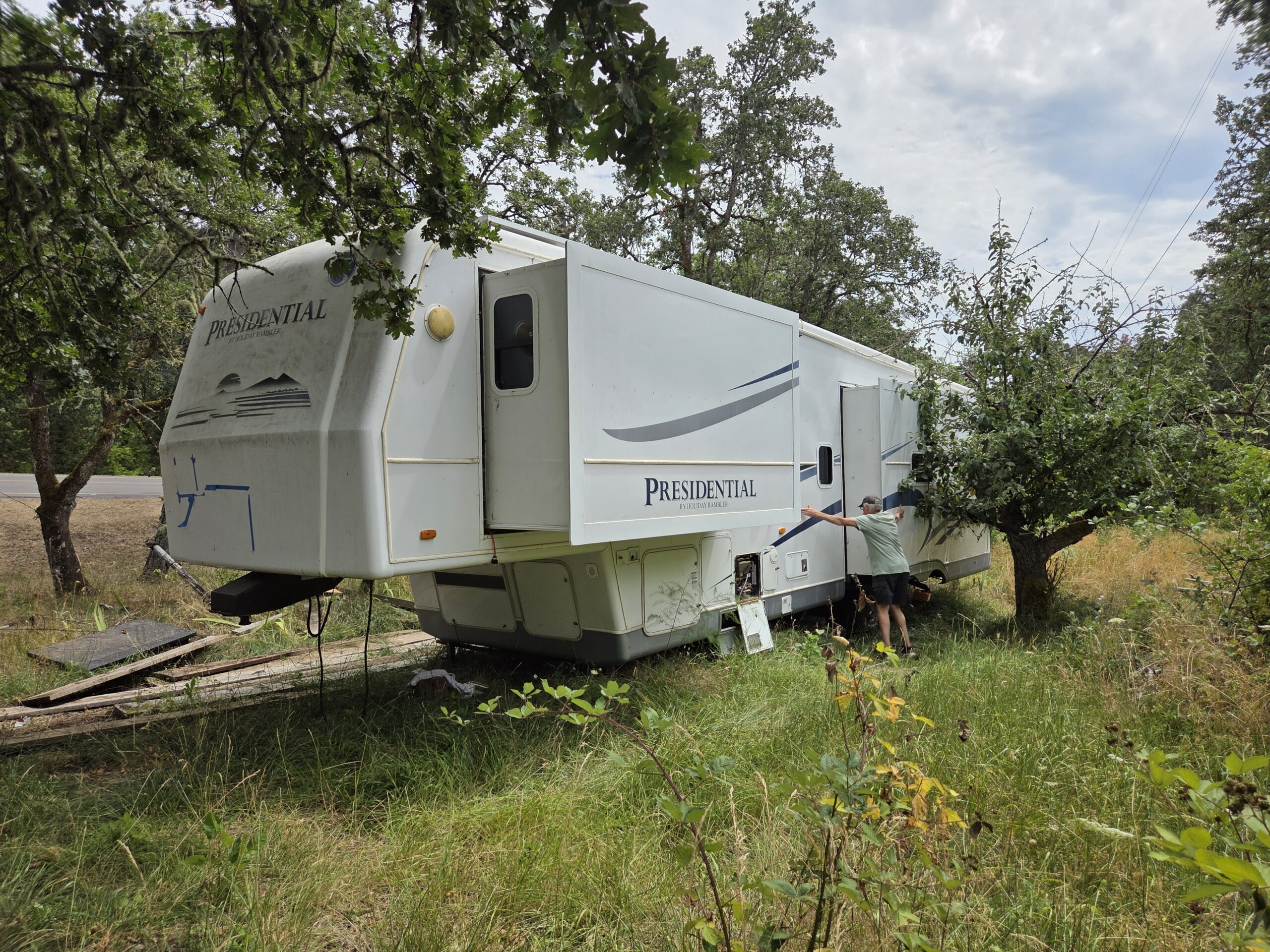
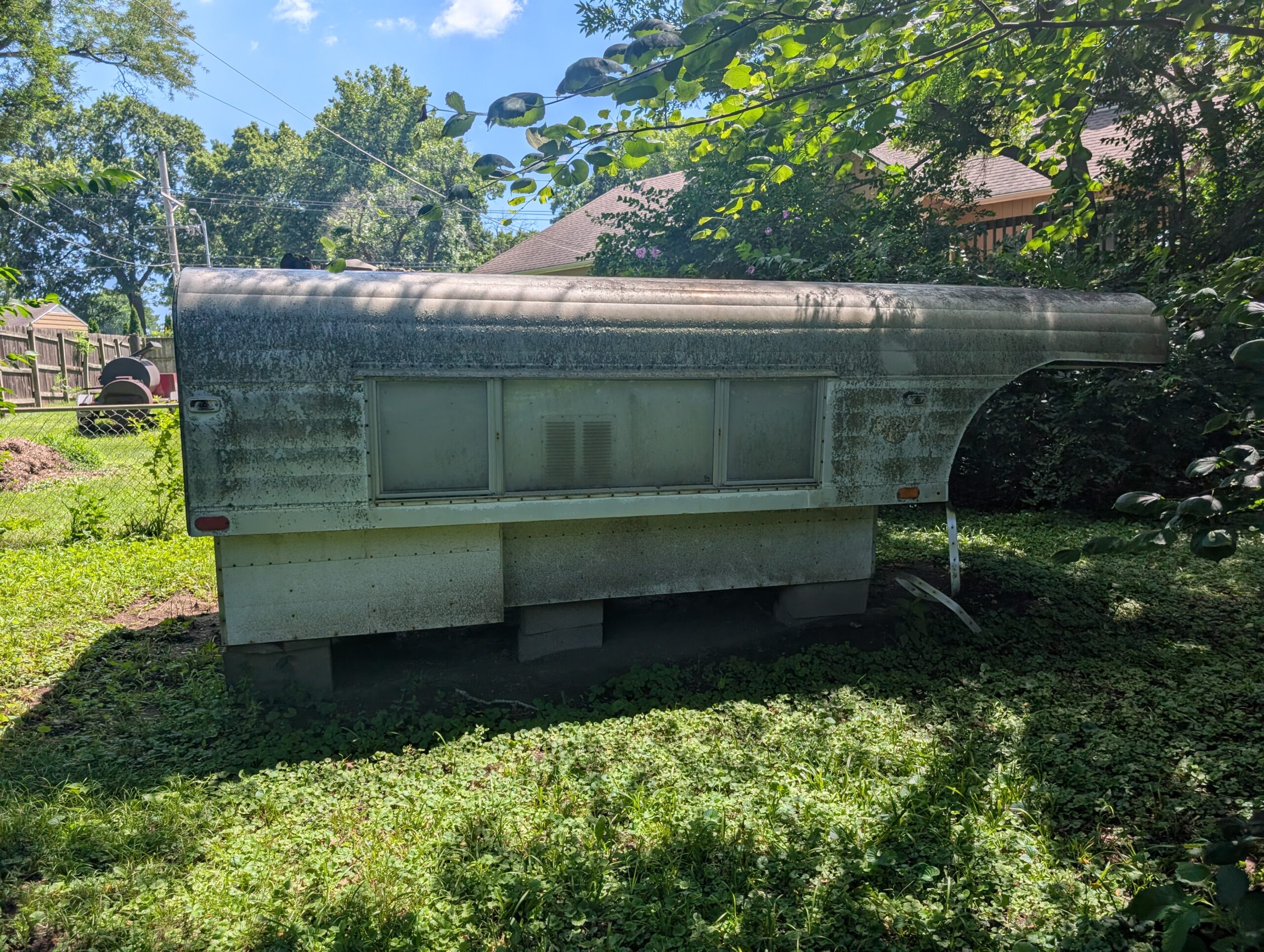
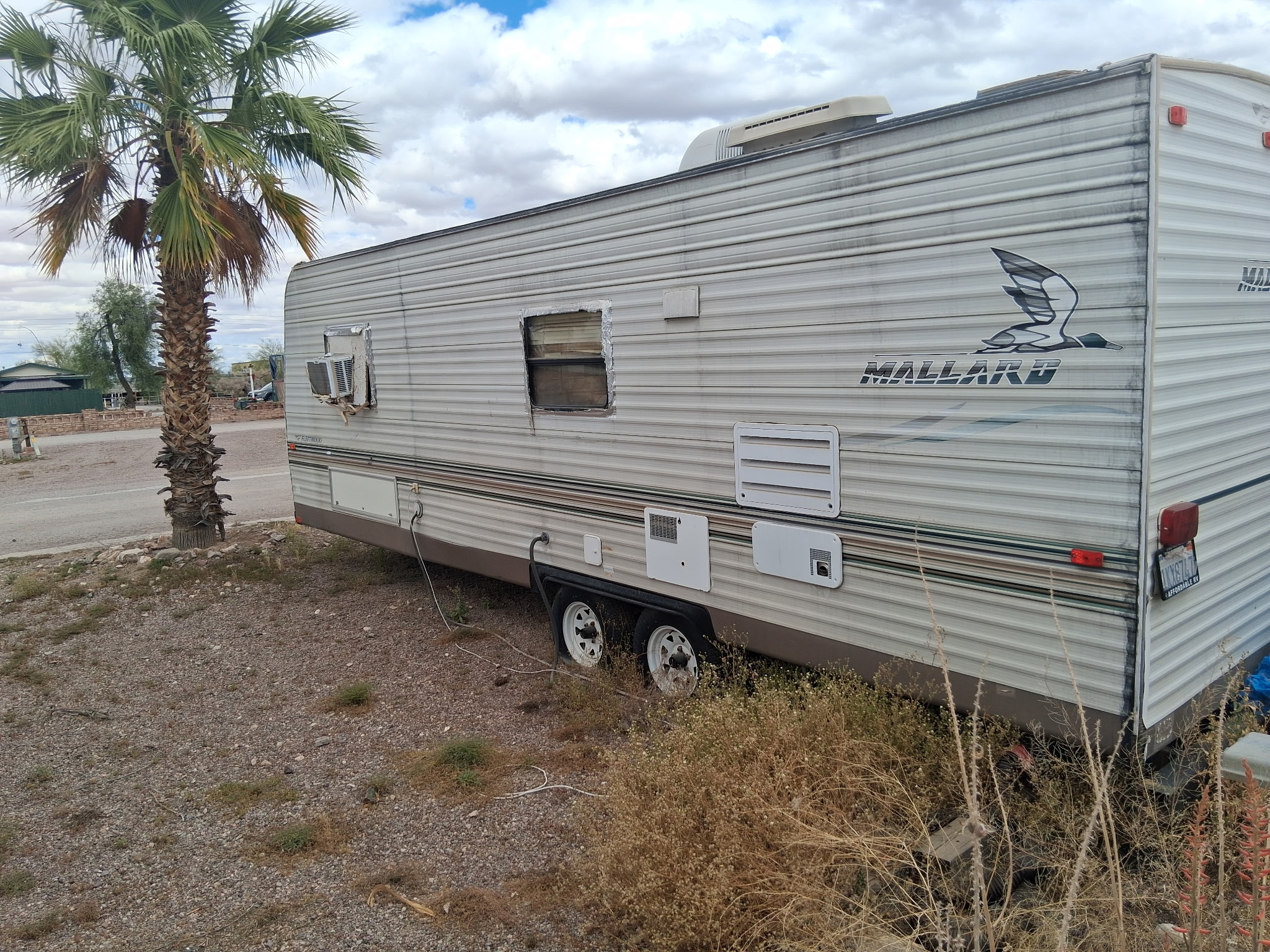
Two things we always need to know
- Can a truck get access to back up to the camper? If a truck cannot get in and back up to the unit, the job usually takes more equipment and time.
- Do the tires hold air? Flat, dry-rotted, or missing tires often mean the unit cannot roll out on its own.
Show both in your photos. The calculator asks these as questions that change the estimate. See the FAQ for more detail.
How a removal works
- Send photos and the location. Use the contact form, email [email protected], or call (855) 713-6280. Include the two must-knows and the photo checklist below.
- We review and quote. Quotes are free. The number depends on the unit, the site, access, the tires, and travel. We will tell you if a crew can reach it.
- We schedule a crew. Some units tow out. Others have to be taken apart. We will say which we expect after we see the photos.
- Reuse or recycle. If a camper can be reused in certain applications, we reuse it. If it cannot, we recycle it. We do not publish reuse percentages or name partners in advance.
A labeled estimate is available on the calculator. It is not a quote.
What we remove
- Pop-up campers — folding and tent campers.
- Drivable campers — Class A, Class B, and Class C motorhomes, and slide-in truck campers.
- Pull-behind campers — travel trailers and fifth wheels.
- Mobile homes — single-wide and double-wide units, usually taken apart on site.
We work on private land and in RV parks, campgrounds, and mobile home parks. Parks are a regular kind of customer.
Choose your state
Navigation is meant to go from this nationwide hub to a state page, then to that state’s city pages. Open your state for title and abandoned-vehicle pointers (with official sources), regional camping context, and city links. Existing city URLs stay at /rv-removal/{city}-{st}/ for now.
If your unit is in Washington, D.C., start with the contact form, or see the Maryland or Virginia page for nearby context. This draft does not include a separate D.C. “state” page.
Photo checklist
- The full unit, from far enough back to see its size and how it sits.
- The path a truck would use, and whether it can back up to the camper (gates, trees, fences, soft ground, a tight park space).
- Close photos of the tires and wheels — do they hold air, or are they flat, cracked, or missing?
- The hitch, tongue, or (for a motorhome) the front end.
- Anything in the way or attached: a deck, shed, skirting, a parked car.
Add the type, length if you know it, the city or ZIP, and your answers to the two must-knows.
Frequently asked questions
Do you really work nationwide?
Yes. We are based in Jacksonville, Florida, and we take jobs in other states when a crew can reach the unit. Send the location with your photos and we will tell you whether we can do it and what it would cost. There is no single nationwide price.
How do I find a city page?
Start on this nationwide hub, open your state page, then use the city links on that state page. Those city URLs are the existing /rv-removal/{city}-{st}/ pages. The state page is the unique, sourced page for that state.
Is removal free?
There is no general free-removal offer. A camper in really good condition may qualify for free removal, only case by case, after we review photos. A typical mobile-home demolition is a paid job. Quotes are always free.
What if a truck cannot back up to the camper, or the tires will not hold air?
Tell us anyway. We still remove units in tight spaces and units with flat or missing tires. The method and the quote often change. Whether a truck can get access to back up to the camper, and whether the tires hold air, are the two things we always need to know on every job.
What should I photograph for a quote?
Photograph the full unit, the path a truck would use to back up to it, close views of the tires, the hitch or front end, and anything in the way. Add the city or ZIP, the type and length if you know them, and your answers to the two must-knows.