
Home · Camper removal near me · New Hampshire
Remove My Camper, powered by Arwood Site Services
New Hampshire packs lakes, a short seacoast, and serious mountains into a small state. Around Manchester and Concord, a camper often sits in a suburban lot or a storage yard. Portsmouth and the seacoast add tighter streets and salt air. Toward the lakes and the White Mountains, seasonal units and steep or wooded driveways decide whether a truck can get in and back up to the camper — especially after a long winter when the tires no longer hold air.
We work nationwide from Jacksonville, Florida. Send the New Hampshire city or town with your photos.
There is no general free-removal offer. A camper in really good condition may qualify for free removal, but only case by case, and only after we review photos.
“If you don’t shop our prices, we both lose.”— John Arwood
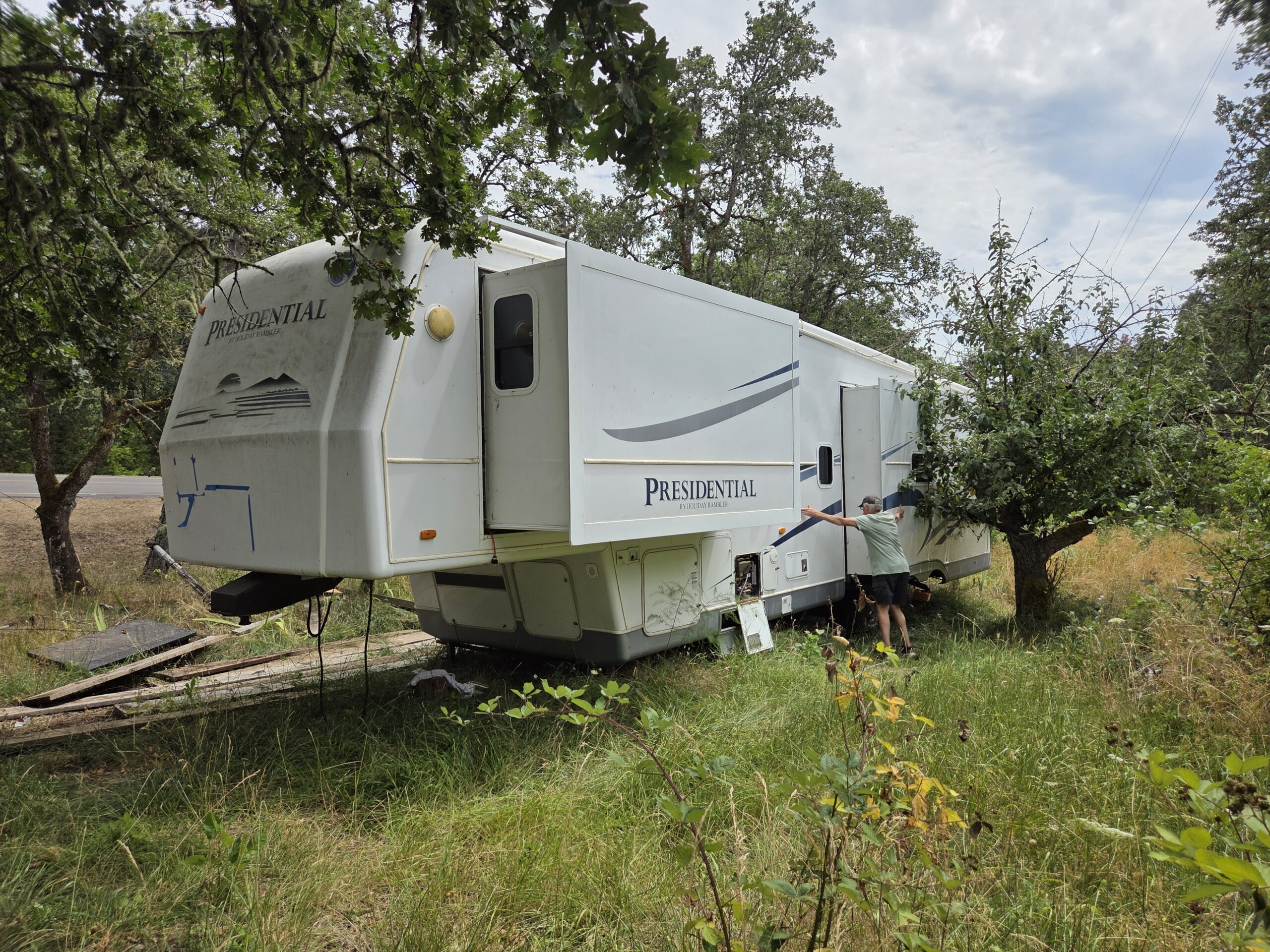
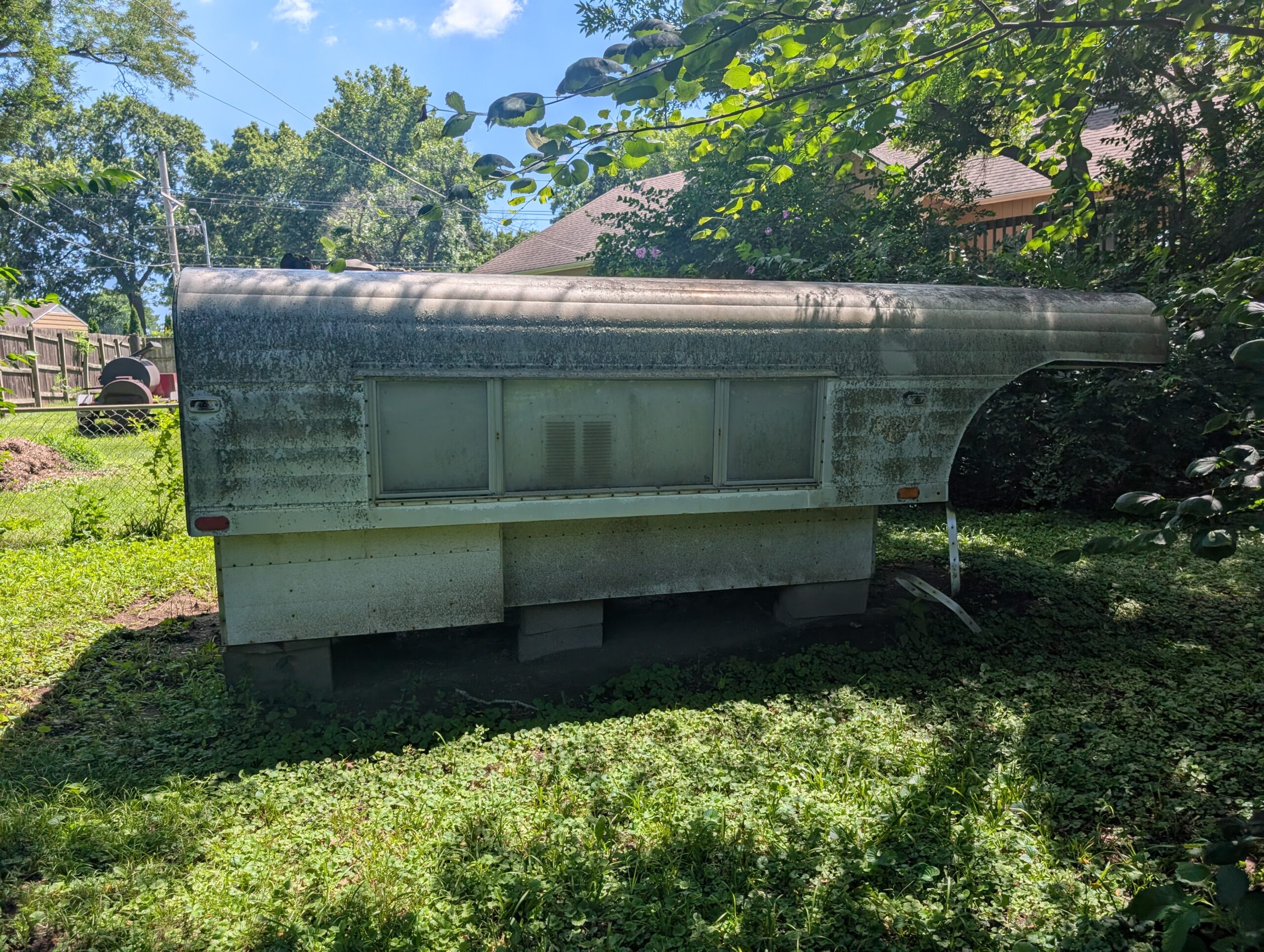
Two things we always need to know
These apply on every New Hampshire job, whether the unit sits in a driveway, a park, or on acreage:
- Can a truck get access to back up to the camper? If a truck cannot get in and back up to it, the job usually takes more equipment and time.
- Do the tires hold air? Flat, dry-rotted, or missing tires often mean the unit cannot roll out on its own.
Tell us both when you request a quote, and show them in your photos. The calculator treats both as questions that affect the estimate. See the FAQ for more detail.
What we remove in New Hampshire
Pop-up campers, drivable campers (Class A, B, and C motorhomes and truck campers), pull-behind travel trailers and fifth wheels, and single-wide or double-wide mobile homes. If a camper can be reused in certain applications, we reuse it. If it cannot, we recycle it. Mobile homes are usually taken apart on site.
We work on private land and in RV parks, campgrounds, and mobile home parks.
Title and registration in New Hampshire
We are not your lawyer, and this is not legal advice. Title and registration rules change. Confirm the current requirement with the official agency before you assume a camper is or is not titled.
The New Hampshire Division of Motor Vehicles handles titles. Official NH DMV guidance on exempt vehicles is the place to confirm whether a particular trailer must be titled. Official materials we reviewed state that trailers under 3,001 pounds are title-exempt and generally do not receive a title.
Motorhomes and heavier trailers are a different path. Confirm the current official exemption list. If you have the title, mention it when you request a quote. If you do not, tell us.
Official sources:
Abandoned campers and vehicles in New Hampshire
Parks, landowners, and owners of a unit left behind often ask how “abandoned” works. The short version: it is a legal process, not something a removal company can declare on a website. Have your paperwork in order on your side. We will tell you what we need in order to schedule a removal.
Official New Hampshire DMV title and form materials address abandoned vehicles as a special documentation path, including a Notice of Compliance (TDMV 109 in official form lists), a VIN verification (TDMV 19A), and, where it applies, a report of sale or transfer. Official DMV VIN-verification guidance states that a VIN verification is required for abandoned vehicles and must be completed by an authorized New Hampshire inspection station, dealer, or law-enforcement officer.
Follow the current official forms and instructions. We do not complete those compliance forms as a legal service described here. We quote the physical removal when you have the right to release the unit.
Official sources:
Camping and RV-park regions
New Hampshire State Parks is the official state-parks program, with parks along the seacoast, around the lakes, and in the White Mountains. Private RV parks follow those same three bands. Regions we use:
- Manchester, Concord, and the southern corridor — Suburban lots and storage yards.
- The seacoast — Portsmouth and nearby towns, with tighter streets and salt air.
- The lakes — Seasonal pads and winter storage; photograph the tires in spring.
- The White Mountains — Steep or wooded driveways that decide whether a truck can back up to the unit.
Official context:
Cities we serve in New Hampshire
Use the city links below for local pages. This state page has unique, sourced New Hampshire context.
If your town is not listed, still request a quote and include the city or ZIP.
Photo checklist
- The full unit, from far enough back to see its size and how it sits.
- The path a truck would use, and whether it can back up to the camper.
- Close photos of the tires and wheels.
- The hitch, tongue, or (for a motorhome) the front end.
- Anything in the way or attached.
Add the city or ZIP, the type and length if you know them, and your answers to the two must-knows.
New Hampshire FAQs
Does a small New Hampshire travel trailer have to be titled?
Official DMV exempt-vehicle guidance we reviewed states that trailers under 3,001 pounds are title-exempt. Confirm the current official page for your trailer's weight and tell us what paperwork you have.
Can you get a truck up a steep, wooded mountain driveway?
Tell us whether a truck can get in and back up to the camper, and photograph the path. Grades and trees change the method and often the quote.
The unit sat at a lake lot all winter. The tires are flat.
Photograph them and tell us whether they hold air. We still remove units that will not roll.
What is a TDMV 109, and do you file it?
Official DMV materials list a Notice of Compliance among abandoned-vehicle documents. That is a DMV documentation path, not a form we file for you as a legal service described on this page.