
Home · Camper & RV Manufacturers · Coleman
Remove My Camper, powered by Arwood Site Services
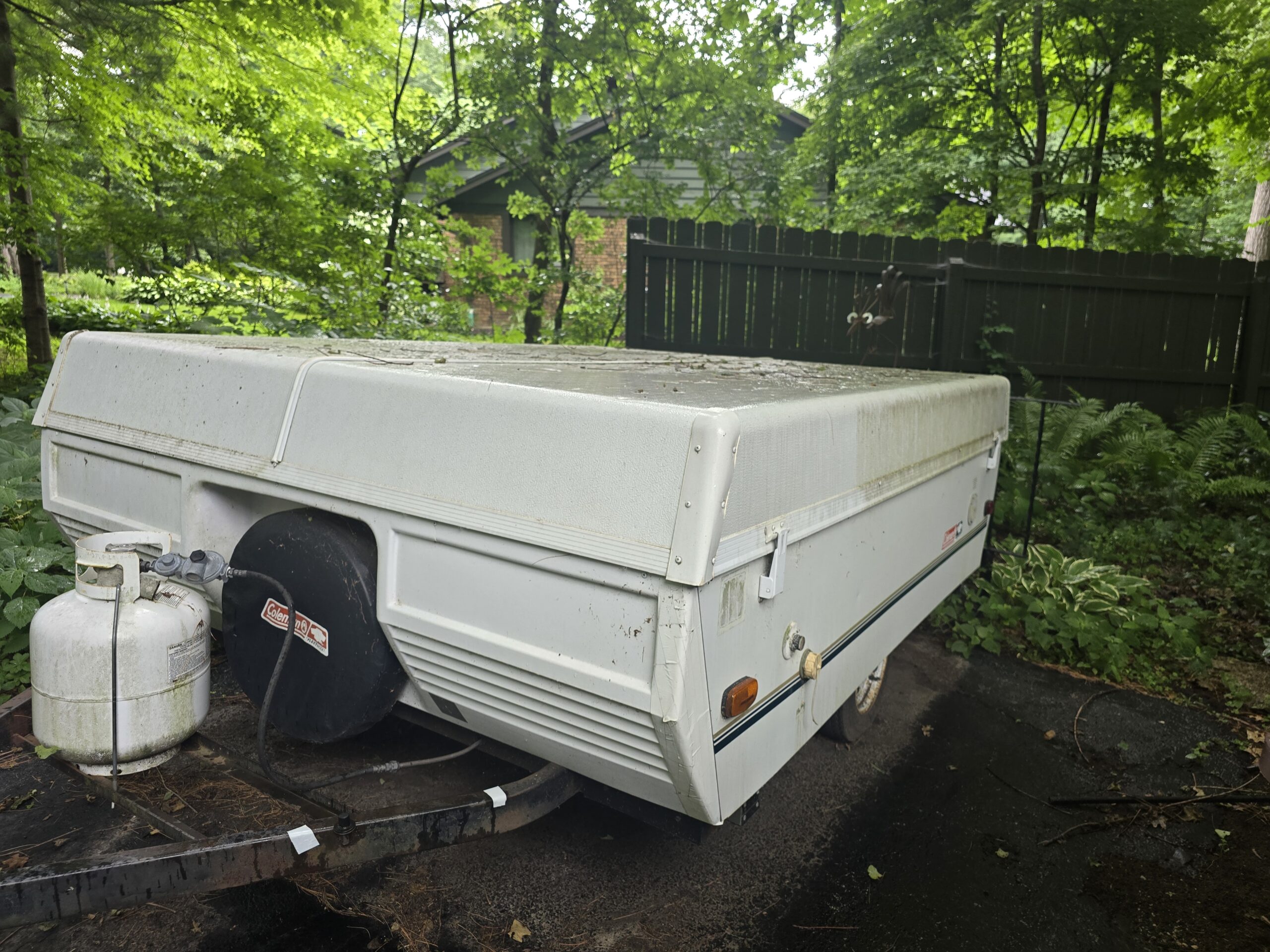
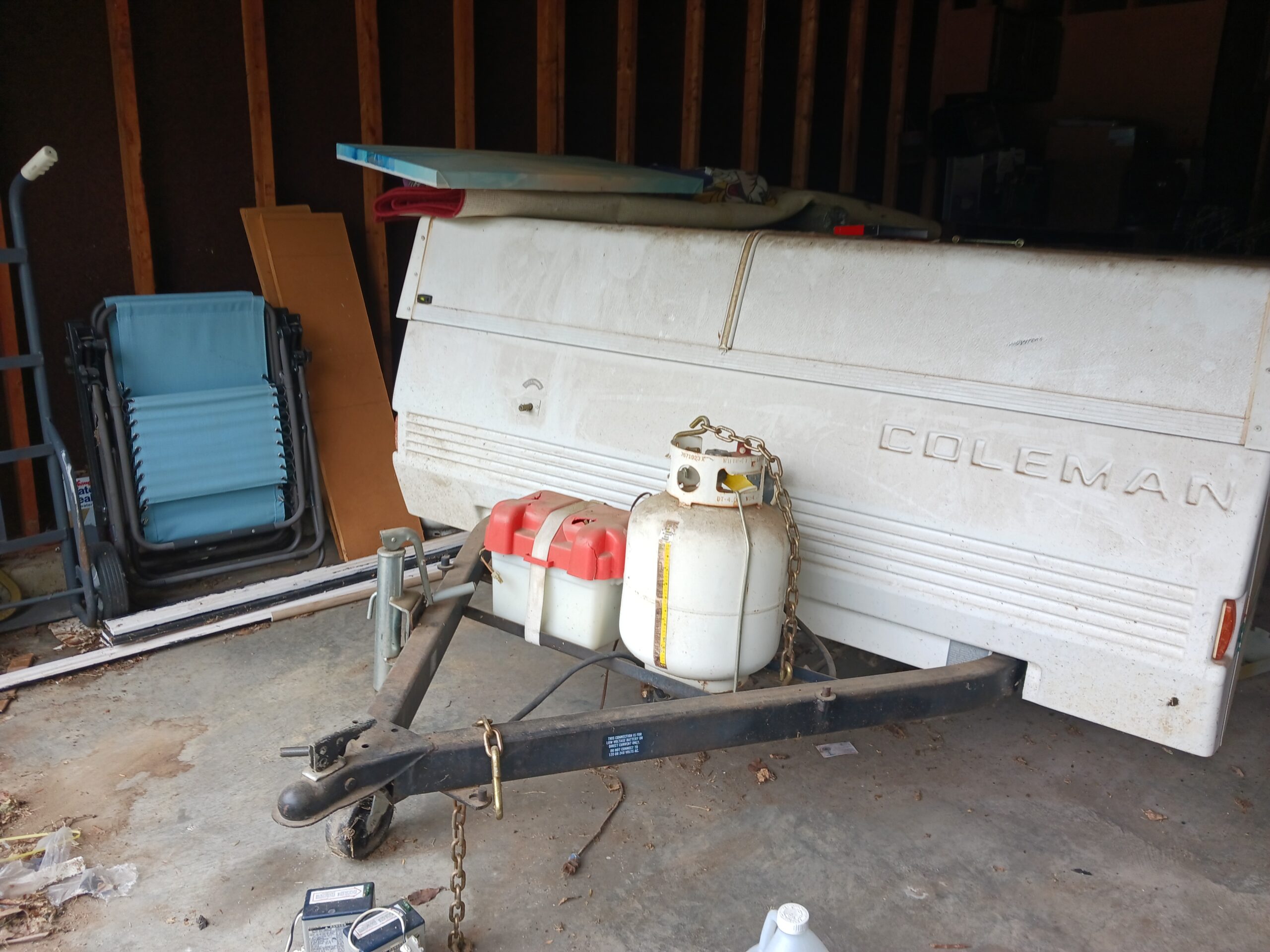
Coleman pop-ups are probably the most common folding campers we remove. They sat in garages and driveways for decades, and plenty of them now have torn canvas, stuck lift systems or flat tires.
The tricky part is that “Coleman” was a license for much of its history, so the company that actually built a Coleman camper depends on its year. We remove all of them, and sort the steel, aluminum and other parts for recycling.
Every removal is quoted after we see photos. Price depends on size, condition, access, and what can be reused or recycled, and we don’t promise free removal or payment for a unit.
Coleman at a glance
- Origins
- Coleman's camping-trailer division, first trailers in 1967
- Who built them
- Coleman (to 1989), Fleetwood (Coleman folding campers 1991-2003), FTCA (2009-2011), Dutchmen (Coleman travel trailers and fifth wheels after 2008)
- Brand owner
- The Coleman Company, Inc.
- Lines you may see
- Coleman folding pop-up campers, hybrid trailers, Coleman-branded travel trailers
A short history of Coleman
A 2008 press release from FTCA, the company that later built Coleman folding campers, says the business began in 1966 as a division of the Coleman Company to make folding camping trailers, with the first trailers coming off the line in 1967. It says Fleetwood Enterprises acquired that division in 1989; a Kansas appeals court opinion dates the stock purchase agreement to December 7, 1989.
After the sale, Fleetwood built folding campers carrying the Coleman name under a trademark license. Coleman ended that license in 2003, and a 2007 Kansas appeals court decision upheld Coleman’s claims over Fleetwood’s continued use of the marks. Coleman’s own licensed-products list now summarizes the history:
- Coleman folding tent campers made by Fleetwood Enterprises from 1991 to 2003
- Coleman folding tent campers made by FTCA from 2009 to 2011, after which FTCA went out of business
- Coleman travel trailers and fifth wheels made by Dutchmen from after 2008 to the present
How Coleman campers are built
Coleman’s 2010 camping-trailer brochure describes a tubular steel chassis and frame, steel bulkheads, galvanized or painted steel body panels, aluminum body and bed rails, and a lift system using stainless steel posts and cables. The tent fabric was a water-repellent acrylic rather than cotton canvas, and roofs were either aluminum-skinned or one-piece fiberglass depending on the series.
Older Fleetwood-built Colemans differ in detail, but the basic layout is the same: a steel box on a small steel trailer frame, a lift system, a fabric tent and a roof. Coleman-branded travel trailers made by Dutchmen are full hard-sided campers, so we handle them like any travel trailer.
Identifying a Coleman before removal
A Coleman pop-up usually has the Coleman name on the end or side of the box. Many also show a series or model name, such as Pioneer. The data plate, usually on the tongue or the front of the box, gives the year and manufacturer, which is how you can tell whether Coleman, Fleetwood or FTCA built it.
A Coleman-branded hard-sided travel trailer or fifth wheel from after 2008 is a Dutchmen build. For a pop-up, photograph it folded down from both ends, the tongue, the tires, and the crank or lift area. Tell us whether the canvas is torn or the roof is damaged, and whether a propane bottle is still mounted.
What we recycle or salvage from a Coleman
A Coleman pop-up is small, but most of what is in it can be sorted. Typical recovery:
- Steel: tubular chassis, frame, bulkheads and steel body panels
- Aluminum: body and bed rails, and aluminum-skinned roofs
- Stainless lift parts: posts, cables and crank assemblies
- Copper wiring: the 12-volt lights and any 120-volt circuits
- Fiberglass: one-piece fiberglass roofs on the series that had them
- Appliances: iceboxes or small refrigerators, stoves and furnaces
- Tires and propane: small trailer tires reused or recycled; the propane bottle at the tongue closed off and handled safely
From our newsroom: Coleman pop-up removals in Georgia and help for old or damaged pop-ups.
Before we quote
Send photos of the whole unit, the tires, the hitch or front end, and the path a truck would use. Tell us two things: can a truck back up to it, and do the tires hold air? Add the city or ZIP and whether you have the title.
Coleman removal FAQs
My Coleman pop-up won't crank up. Can you still remove it?
Yes. A stuck or broken lift system does not stop us from removing it folded down. Photograph it closed, plus the tongue and tires.
Who built my Coleman camper?
It depends on the year. Coleman’s own list says Fleetwood built Coleman folding campers from 1991 to 2003, FTCA from 2009 to 2011, and Dutchmen builds Coleman travel trailers.
Do you remove Coleman travel trailers, not just pop-ups?
Yes. Dutchmen-built Coleman travel trailers and fifth wheels are removed like any hard-sided camper.
How do I get a quote on a Coleman pop-up?
Send a few photos and the city or ZIP to [email protected], or call (855) 713-6280.
Where we work
We take jobs across the country. See camper removal near me for every state and city page, or browse all camper and RV manufacturers.
Related brands
Brand names are used only to describe the campers we remove. Remove My Camper is not affiliated with The Coleman Company or any company licensed to use the Coleman name, and the facts above come from public company histories, filings and news reports.