
Home · Camper removal near me · Florida
Remove My Camper, powered by Arwood Site Services
Florida is our home state. Remove My Camper, powered by Arwood Site Services, is headquartered at 16150 N Main Street in Jacksonville, and we take jobs from the First Coast through the Panhandle, the I-4 corridor, Tampa Bay, the southwest coast, and South Florida when a crew can reach the unit.
People here leave campers behind for reasons that are specific to this peninsula: a snowbird season that ends and a unit that never rolls north, a park space that stopped being a good fit, a storm-damaged trailer that is no longer worth repairing, or a mobile home that has reached the end of its life on a park lot. Those are removal jobs, not a general free pickup.
There is no general free-removal offer. A camper in really good condition may qualify for free removal, but only case by case, and only after we review photos.
“If you don’t shop our prices, we both lose.”— John Arwood
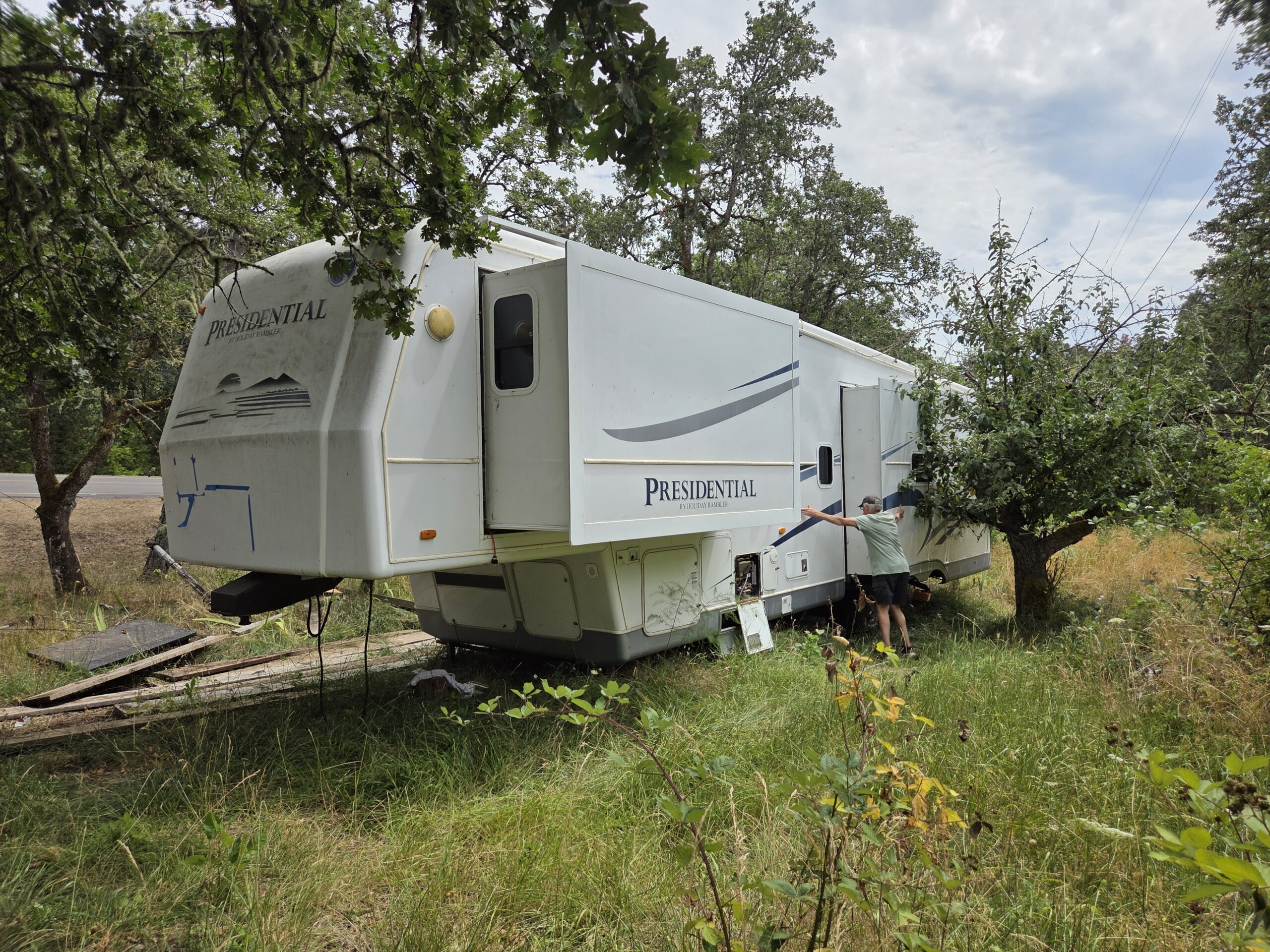
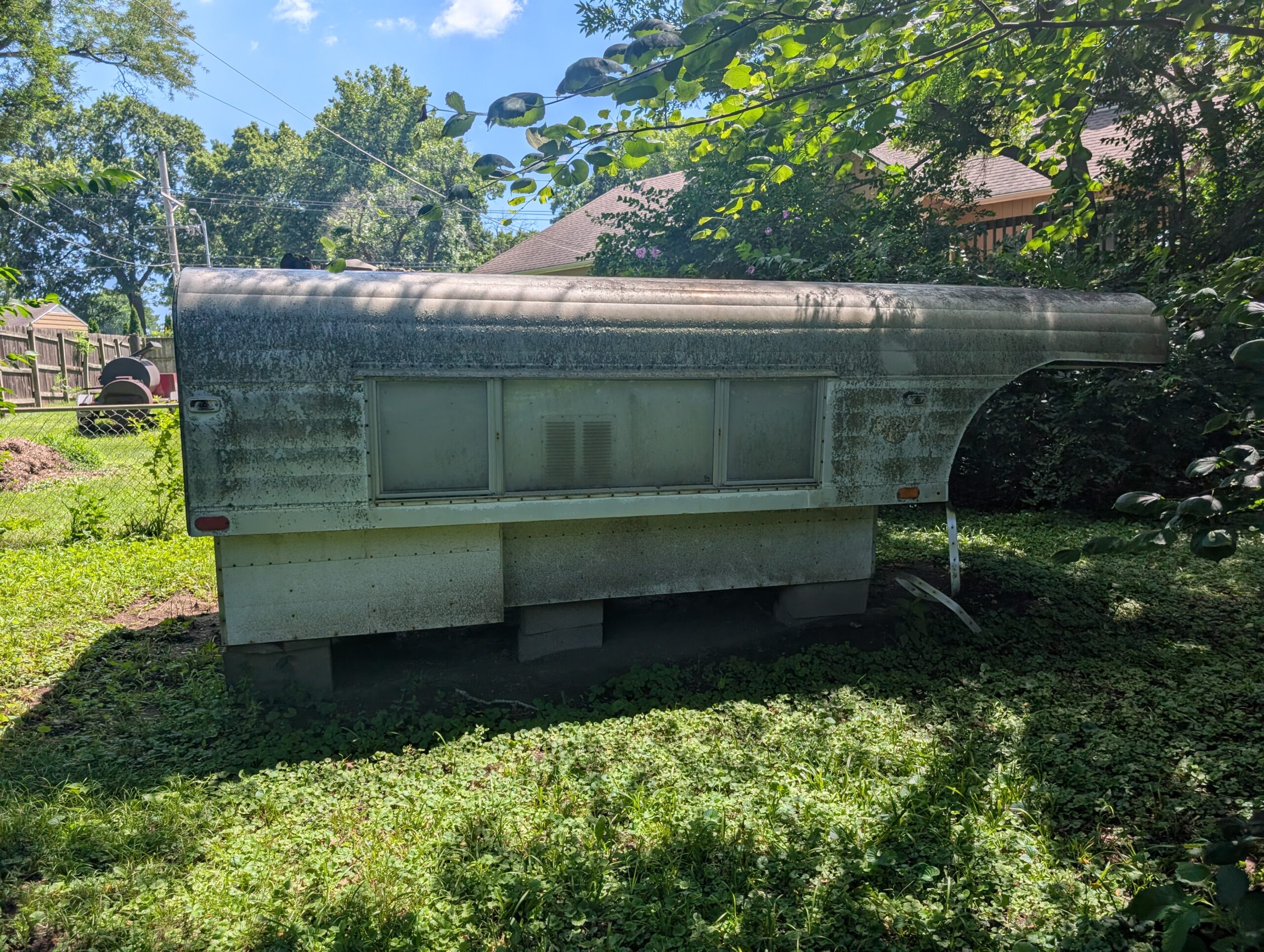
Two things we always need to know
These apply on every Florida job, whether the unit sits in a driveway, a park, or on acreage:
- Can a truck get access to back up to the camper? If a truck cannot get in and back up to it, the job usually takes more equipment and time.
- Do the tires hold air? Flat, dry-rotted, or missing tires often mean the unit cannot roll out on its own.
Tell us both when you request a quote, and show them in your photos. The calculator treats both as questions that affect the estimate. See the FAQ for more detail.
What we remove in Florida
Pop-up campers, drivable campers (Class A, B, and C motorhomes and truck campers), pull-behind travel trailers and fifth wheels, and single-wide or double-wide mobile homes. If a camper can be reused in certain applications, we reuse it. If it cannot, we recycle it. Mobile homes are usually taken apart on site.
We work on private land and in RV parks, campgrounds, and mobile home parks.
Title and registration in Florida
We are not your lawyer, and this is not legal advice. Title and registration rules change. Confirm the current requirement with the official agency before you assume a camper is or is not titled.
The Florida Department of Highway Safety and Motor Vehicles (FLHSMV) issues certificates of title for vehicles, mobile homes, and many trailers. FLHSMV’s title page states that most vehicles, mobile homes, or vessels must be titled, with exceptions that include trailers weighing less than 2,000 pounds.
FLHSMV procedure TL-13 is the official internal guide for titling recreational vehicles, mobile homes, and office trailers. It points to section 320.01(1)(b), Florida Statutes, for the definition of a recreational vehicle, and it states that a certificate of title is not allowed for slide-in campers (the camper itself is not titled; a pickup with a mounted camper may be coded differently). Trailers weighing 2,000 pounds or more must be titled. Application is generally made with form HSMV 82040 plus proof of identity and proof of ownership.
If you have the title, bring that up when you request a quote. If you do not, tell us — some jobs can still proceed once paperwork is sorted out, and some cannot. We will not decide a title question from this page.
Official sources:
Abandoned campers and vehicles in Florida
Parks, landowners, and owners of a unit left behind often ask how “abandoned” works. The short version: it is a legal process, not something a removal company can declare on a website. Have your paperwork in order on your side. We will tell you what we need in order to schedule a removal.
Florida does not use a single “abandoned RV” form the way some western states do. Two official tracks show up often:
Lost or abandoned property on public property is addressed in chapter 705, Florida Statutes. Section 705.103 describes the procedure a law-enforcement officer follows, including posted notice and, for a motor vehicle, a requirement that the agency contact FLHSMV for owner and lienholder information and mail notice. FLHSMV procedure TL-29 is the department’s title-transfer procedure for lost or abandoned property handled by a law-enforcement agency.
Vehicles or vessels parked on private property, and the rules for having them towed, are addressed in section 715.07, Florida Statutes. That statute defines “vehicle” broadly as any mobile item which normally uses wheels, whether motorized or not — language that can include a pull-behind camper — and it sets conditions on private-property towing, storage distance, and redemption.
An RV park or landowner should work from their agreement, local rules, and, when needed, counsel or the local agency — not from a removal company’s summary. We remove the unit when you have the right to release it.
Official sources:
- Florida Statutes § 705.103 (2025) — Procedure for abandoned or lost property (Florida Senate)
- Florida Statutes chapter 705 (2026) — Lost or Abandoned Property (Florida Senate)
- Florida Statutes § 715.07 (2025) — Vehicles or vessels parked on private property; towing (Florida Senate)
- FLHSMV procedure TL-29 (PDF)
Camping and RV-park regions
Florida’s public and private campground map is not one belt. State parks run the length of the peninsula and the Panhandle, and private RV parks and mobile home communities are dense around the visitor corridors and the coasts. Official camping information starts with the Florida State Parks program. Typical regions we hear about when someone has a unit to remove:
- First Coast and North Florida — Jacksonville and the St. Johns, down toward St. Augustine and inland toward the lakes, including our own headquarters area.
- The Panhandle — Pensacola through Panama City and the rural parks inland from the Gulf.
- Central Florida and the I-4 corridor — Orlando, Kissimmee, Sanford, and the short-term and seasonal parks that serve the theme-park belt.
- Tampa Bay — Tampa, Saint Petersburg, and the older park and mobile-home communities around the bay.
- Southwest Gulf — Sarasota, Fort Myers, and Naples, with a large winter-resident park inventory.
- South Florida and the Keys — Miami-Dade, the Gold Coast, Homestead, and Key West — tighter access and salt air are common issues on these jobs.
Official context:
Cities we serve in Florida
Use the city links below for local pages. This state page has unique, sourced Florida context.
If your town is not listed, still request a quote and include the city or ZIP.
Photo checklist
- The full unit, from far enough back to see its size and how it sits.
- The path a truck would use, and whether it can back up to the camper.
- Close photos of the tires and wheels.
- The hitch, tongue, or (for a motorhome) the front end.
- Anything in the way or attached.
Add the city or ZIP, the type and length if you know them, and your answers to the two must-knows.
Florida FAQs
Do you remove campers in Florida parks and mobile home communities?
Yes. Parks and campgrounds are a regular kind of customer in Florida, not an afterthought. Send photos, the park or lot context, and tell us whether a truck can back up to the unit and whether the tires hold air. If a manager’s contact or a gate code will help a crew get in, include that.
The title is missing, or the camper is a slide-in truck camper. Can you still take it?
Maybe — it depends on the unit and the paperwork. FLHSMV’s TL-13 procedure states that a certificate of title is not allowed for slide-in campers, and that trailers under 2,000 pounds are treated differently from heavier trailers. Tell us what you have. We are not the tax collector and we will not invent a title rule.
What if the camper was damaged in a storm?
We take burned, flooded, or gutted units. Those are usually paid removals, and they may cost more because the unit often cannot roll out in one piece. Photograph the damage, the path out, and the tires.
Are you actually based in Jacksonville?
Yes. The Remove My Camper headquarters address is 16150 N Main Street, Jacksonville, FL 32218. Call (855) 713-6280 or email [email protected].