
Home · Camper removal near me · Texas
Remove My Camper, powered by Arwood Site Services
Texas is not one camper market. A travel trailer on a Gulf-coast lot outside Houston faces humidity and storm water. A fifth-wheel stored on acreage north of Dallas sits in heat and open approach roads. A unit in San Antonio or along the corridor toward the Rio Grande Valley may have been staged for a winter stay that ended early. Austin and the Hill Country add trees, grades, and tight driveways that change whether a truck can back up to the camper.
Remove My Camper works nationwide from Jacksonville, Florida. Send the Texas city or ZIP with your photos and we will tell you whether a crew can reach the unit and what it would cost.
There is no general free-removal offer. A camper in really good condition may qualify for free removal, but only case by case, and only after we review photos.
“If you don’t shop our prices, we both lose.”— John Arwood
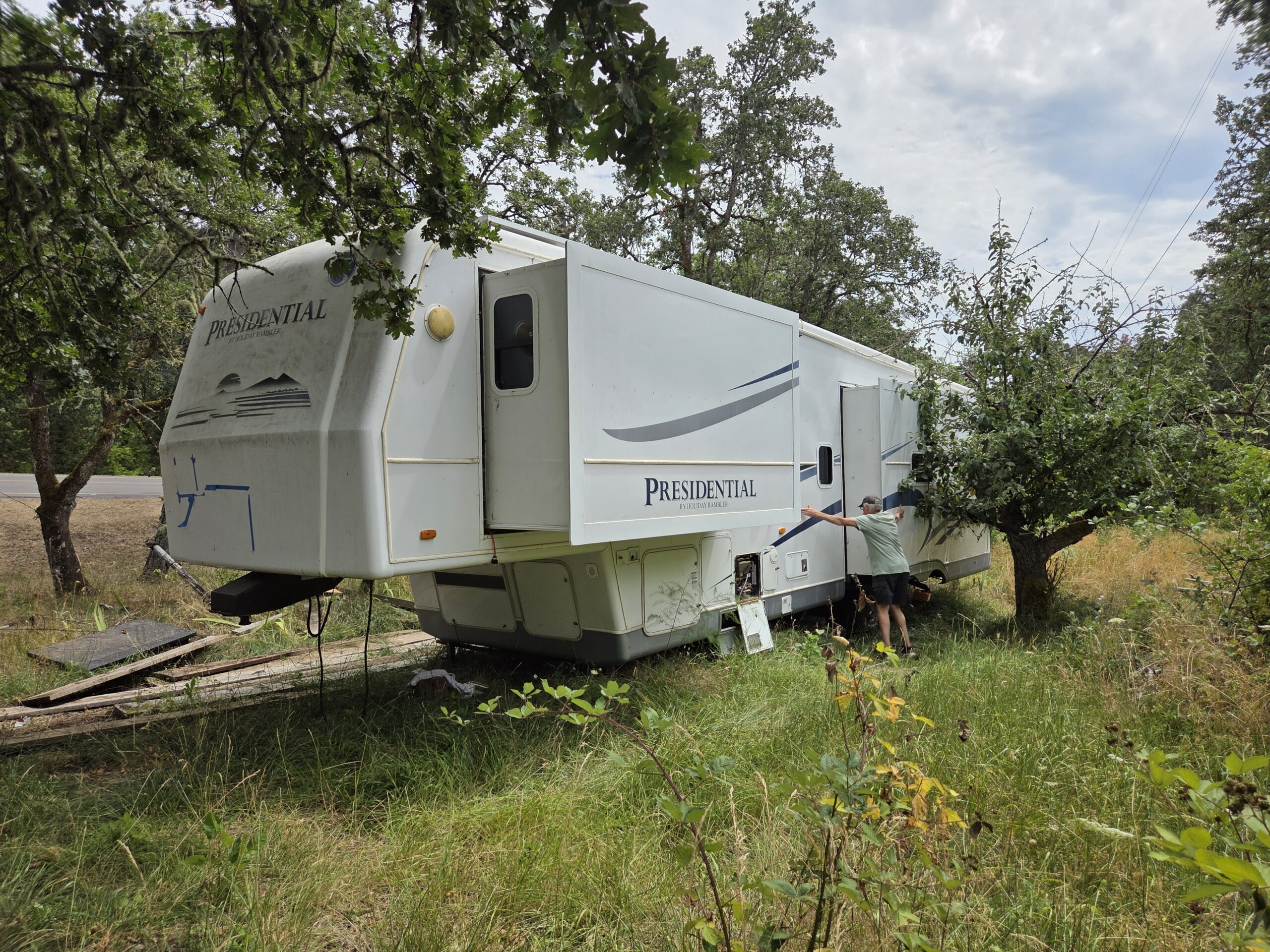
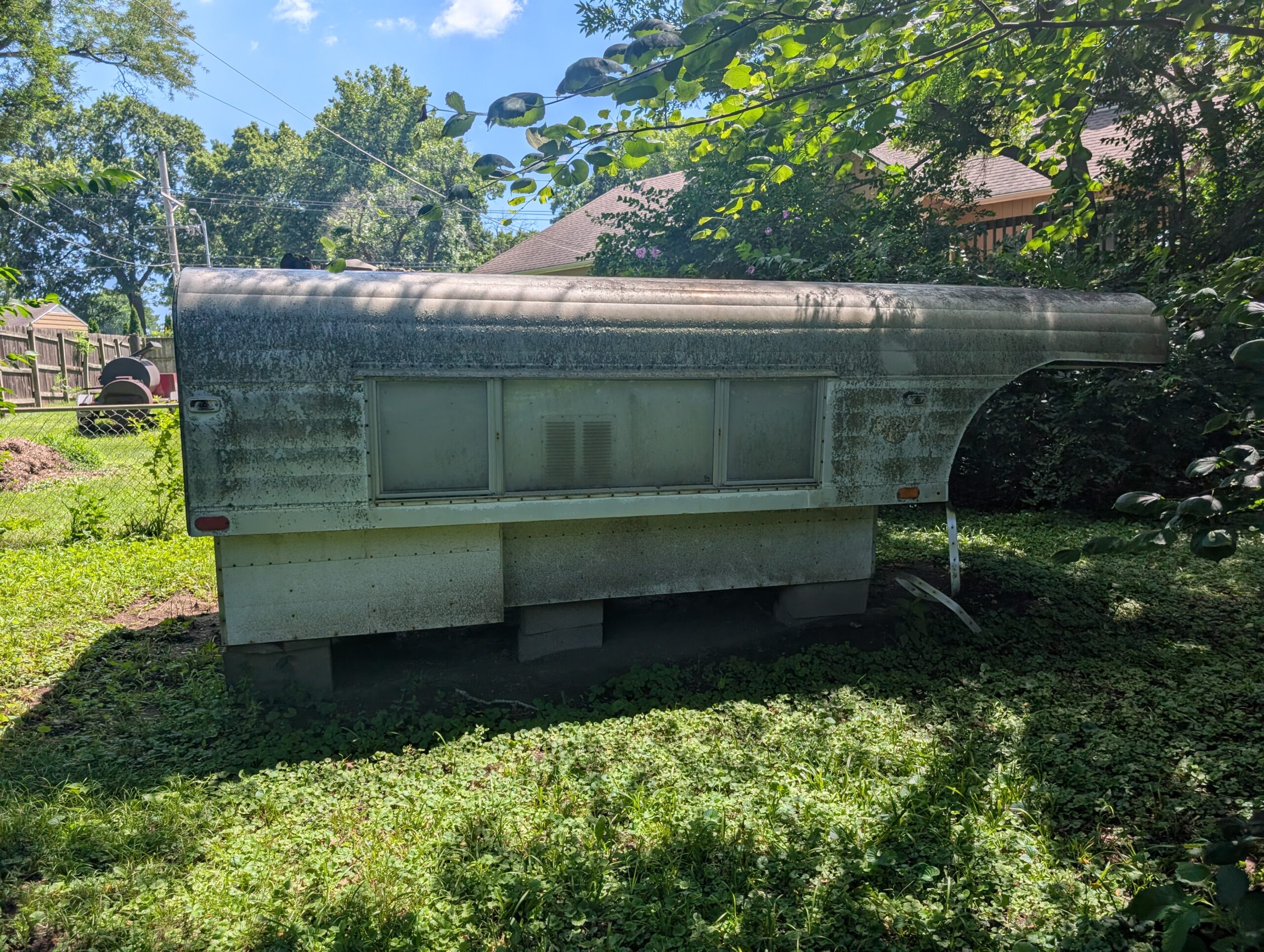
Two things we always need to know
These apply on every Texas job, whether the unit sits in a driveway, a park, or on acreage:
- Can a truck get access to back up to the camper? If a truck cannot get in and back up to it, the job usually takes more equipment and time.
- Do the tires hold air? Flat, dry-rotted, or missing tires often mean the unit cannot roll out on its own.
Tell us both when you request a quote, and show them in your photos. The calculator treats both as questions that affect the estimate. See the FAQ for more detail.
What we remove in Texas
Pop-up campers, drivable campers (Class A, B, and C motorhomes and truck campers), pull-behind travel trailers and fifth wheels, and single-wide or double-wide mobile homes. If a camper can be reused in certain applications, we reuse it. If it cannot, we recycle it. Mobile homes are usually taken apart on site.
We work on private land and in RV parks, campgrounds, and mobile home parks.
Title and registration in Texas
We are not your lawyer, and this is not legal advice. Title and registration rules change. Confirm the current requirement with the official agency before you assume a camper is or is not titled.
Titles and registrations for vehicles and many trailers run through the Texas Department of Motor Vehicles (TxDMV), usually at a county tax assessor-collector office.
TxDMV’s official trailer page states that registration is required for all non-farm trailers operating on public highways, and that titling depends on type and weight. For a manufactured trailer, a gross weight over 4,000 pounds must be titled, with Form 130-U, fees, and evidence of ownership (a manufacturer’s certificate of origin for a new trailer, or a certificate of title for a used trailer over that weight). Lighter used trailers may be handled with a bill of sale plus a registration receipt or a title if one was issued. Assembled trailers have their own rules; titling is described as optional for some newly assembled trailers at or under 4,000 pounds gross weight.
Motorhomes are titled as motor vehicles. If you bought a unit without a title, TxDMV describes a bonded-title path with eligibility limits — including that the vehicle cannot be considered junked or nonrepairable for that process. Confirm the current rule with TxDMV or the county office. Having the title helps a removal; a missing title should be disclosed when you ask for a quote.
Official sources:
Abandoned campers and vehicles in Texas
Parks, landowners, and owners of a unit left behind often ask how “abandoned” works. The short version: it is a legal process, not something a removal company can declare on a website. Have your paperwork in order on your side. We will tell you what we need in order to schedule a removal.
Abandoned motor vehicles in Texas are addressed in Transportation Code chapter 683, published by the Texas Legislature. Section 683.002 lists when a motor vehicle is abandoned — including an inoperable vehicle more than five years old left unattended on public property for more than 48 hours, a vehicle left illegally on public property for more than 48 hours, a vehicle left on private property without the consent of the owner or person in charge for more than 48 hours, and certain highway right-of-way time limits (48 hours on designated highways; 24 hours on certain turnpike or controlled-access right-of-way).
The chapter also describes notice to the last known registered owner and lienholders and, if the vehicle is not claimed, auction or other disposition by a law-enforcement agency. This is a government process. A park operator or landowner should follow the statute, local procedure, and their own counsel — not a website summary — before they assume they can release a unit.
Official sources:
Camping and RV-park regions
Texas Parks & Wildlife is the official state-parks agency and publishes camping and group-RV information for state parks across the state. Private RV parks and mobile home communities cluster around different regions than the state-park map alone would suggest:
- Gulf Coast — Houston, Galveston, and coastal counties where flood and humidity are part of the removal conversation.
- Dallas–Fort Worth — A large inland metro with storage lots and private-acreage units; Dallas and Fort Worth should be treated as separate cities.
- Hill Country and Austin — Trees, grades, and lake parks that often make truck access the first question.
- San Antonio and the I-35 / I-10 cross — A travel corridor toward South Texas, with a large local park inventory of its own.
- Rio Grande Valley and Coastal South Texas — McAllen, Corpus Christi, and winter-stay parks. Link those cities from this state page rather than treating them as suburbs of San Antonio.
- West Texas and El Paso — Long distances, desert storage, and a different travel cost than the Triangle.
Official context:
- Texas Parks & Wildlife — Camping and Lodging
- Texas Parks & Wildlife — Recreational Vehicle (RV) Group Packages
Cities we serve in Texas
Use the city links below for local pages. This state page has unique, sourced Texas context.
If your town is not listed, still request a quote and include the city or ZIP.
Photo checklist
- The full unit, from far enough back to see its size and how it sits.
- The path a truck would use, and whether it can back up to the camper.
- Close photos of the tires and wheels.
- The hitch, tongue, or (for a motorhome) the front end.
- Anything in the way or attached.
Add the city or ZIP, the type and length if you know them, and your answers to the two must-knows.
Texas FAQs
Do you work in both Houston and the Hill Country, or only in big cities?
We take Texas jobs when a crew can reach the unit, in cities and in smaller towns. Travel is part of the quote. Send the city or ZIP, photos, and the two must-knows: truck access to back up, and whether the tires hold air.
My trailer might be under 4,000 pounds. Does it still need a title?
TxDMV’s trailer page makes weight and whether the trailer is manufactured or assembled part of the answer. We will not decide that for you. Check with TxDMV or the county tax assessor-collector, and tell us what paperwork you actually have.
The camper flooded in a storm. Will you still take it?
Yes. Flooded, burned, or gutted units are usually paid removals and may need to be taken apart. Photograph the unit, the path a truck would use, and the tires.
Can a park in Texas have you haul out an abandoned trailer?
Parks are a regular customer. The park still has to have the right to release the unit. Chapter 683 is the official abandoned-motor-vehicle framework; we are not the law-enforcement agency and we do not run that process for you.