
Home · Camper removal near me · West Virginia
Remove My Camper, powered by Arwood Site Services
West Virginia camper work is access first. Charleston, Huntington, and the river towns have lots and park pads in narrow valleys. Morgantown and the north add a university-town pattern and steep approaches. Between the cities, a unit may sit on a bench above a two-lane road, down a hollow, or in a park loop a truck cannot easily back through. Whether a truck can get in, and whether the tires hold air after sitting on that pad, belong in the first photos — not as an afterthought.
We work nationwide from Jacksonville, Florida. Send the West Virginia city or community name with your photos.
There is no general free-removal offer. A camper in really good condition may qualify for free removal, but only case by case, and only after we review photos.
“If you don’t shop our prices, we both lose.”— John Arwood
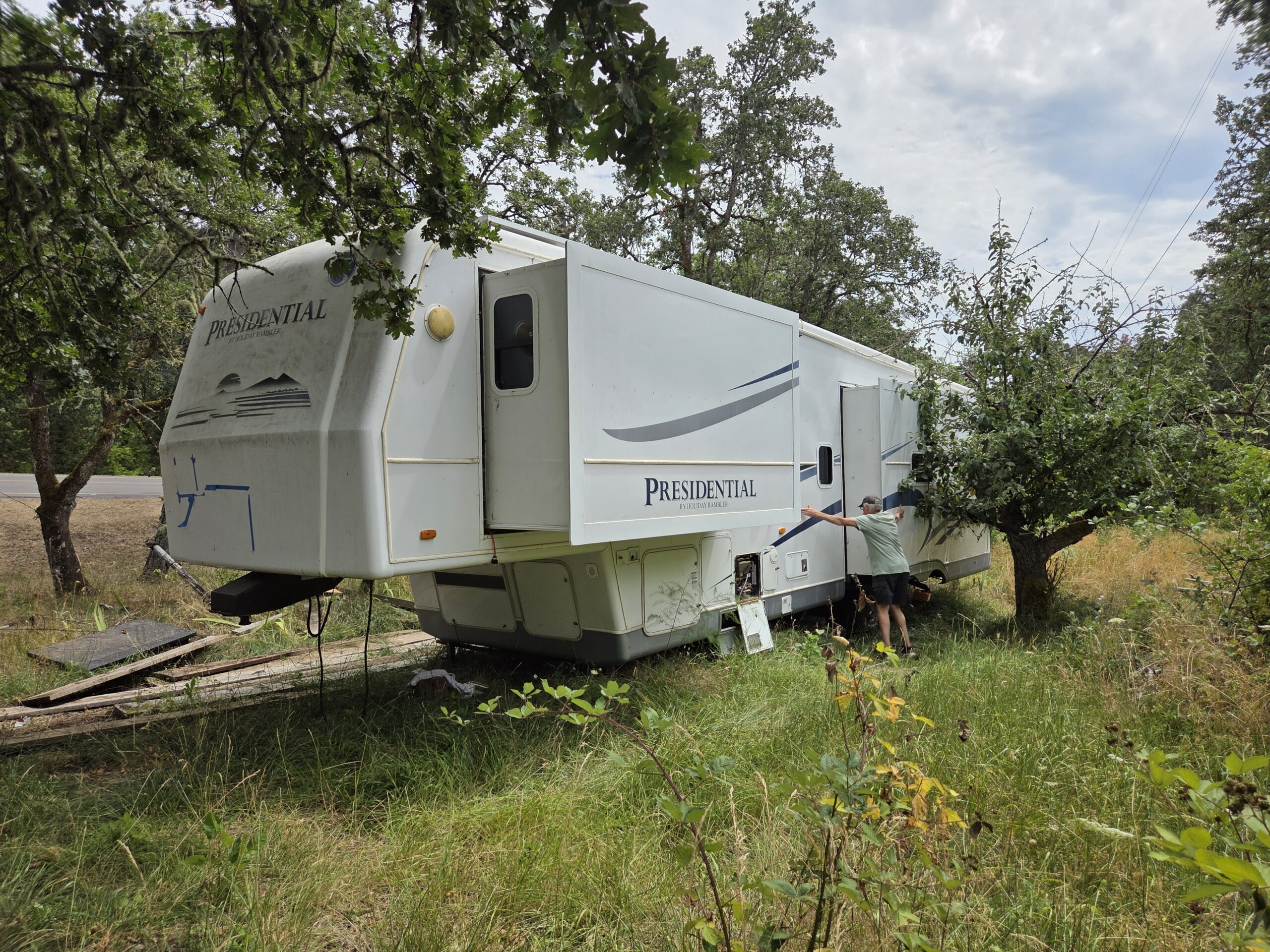
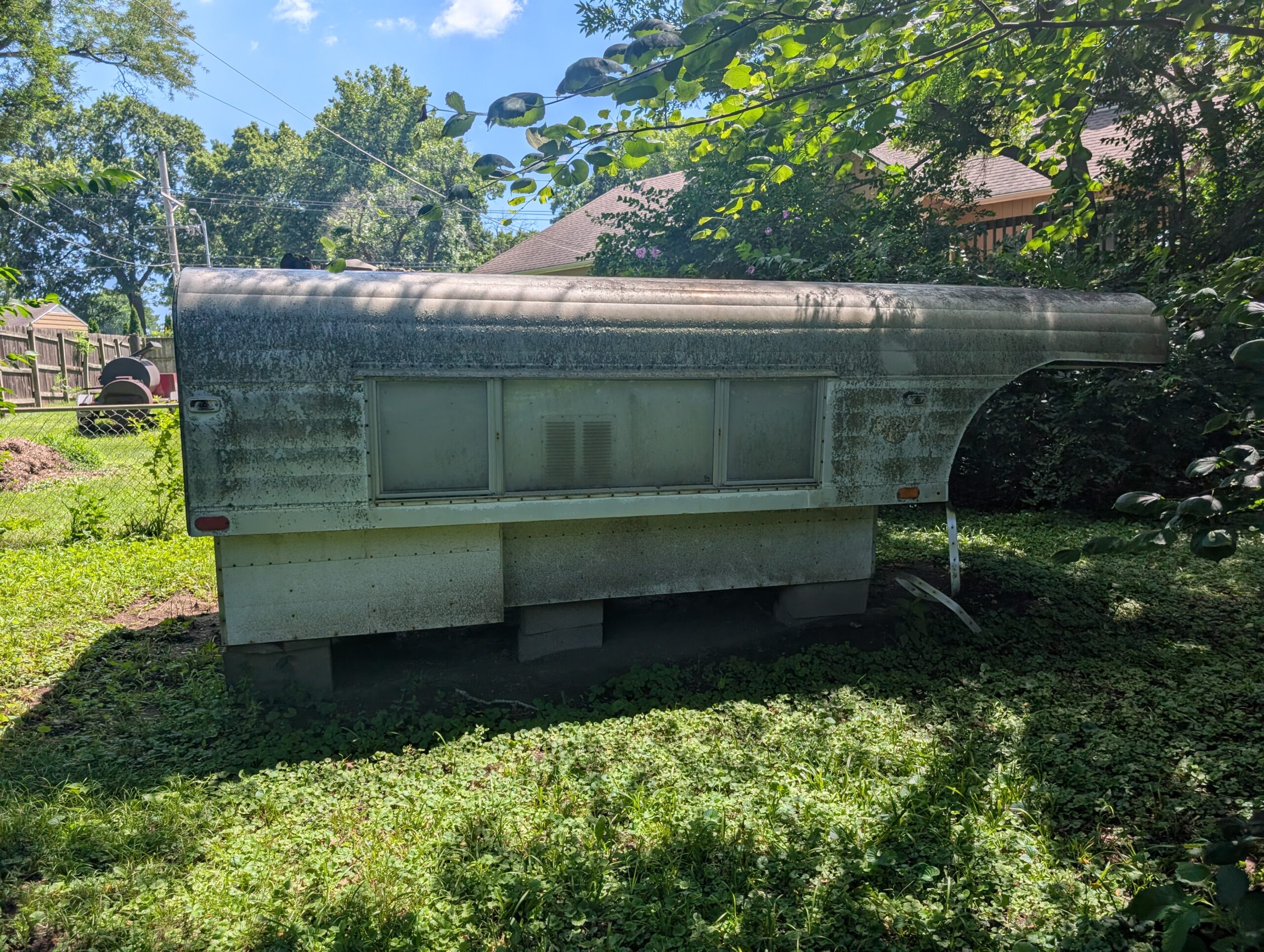
Two things we always need to know
These apply on every West Virginia job, whether the unit sits in a driveway, a park, or on acreage:
- Can a truck get access to back up to the camper? If a truck cannot get in and back up to it, the job usually takes more equipment and time.
- Do the tires hold air? Flat, dry-rotted, or missing tires often mean the unit cannot roll out on its own.
Tell us both when you request a quote, and show them in your photos. The calculator treats both as questions that affect the estimate. See the FAQ for more detail.
What we remove in West Virginia
Pop-up campers, drivable campers (Class A, B, and C motorhomes and truck campers), pull-behind travel trailers and fifth wheels, and single-wide or double-wide mobile homes. If a camper can be reused in certain applications, we reuse it. If it cannot, we recycle it. Mobile homes are usually taken apart on site.
We work on private land and in RV parks, campgrounds, and mobile home parks.
Title and registration in West Virginia
We are not your lawyer, and this is not legal advice. Title and registration rules change. Confirm the current requirement with the official agency before you assume a camper is or is not titled.
The West Virginia Division of Motor Vehicles handles titles and registration. Official DMV title pages are the place to confirm what is required to title a motorhome or a trailer. Official abandoned-vehicle materials also treat trailers as part of the general titling system rather than as an untitled afterthought — confirm the current official rule for your unit.
If you have the title, mention it when you request a quote. If you do not, tell us.
Official sources:
Abandoned campers and vehicles in West Virginia
Parks, landowners, and owners of a unit left behind often ask how “abandoned” works. The short version: it is a legal process, not something a removal company can declare on a website. Have your paperwork in order on your side. We will tell you what we need in order to schedule a removal.
West Virginia DMV publishes official abandoned-vehicle procedures, checklists, and affidavits, including Form DMV-130-TR (Affidavit for Possession of a Junked or Abandoned Motor Vehicle). Official procedure materials we reviewed state that only licensed West Virginia towing companies, dealers, repair facilities, auto auctions, and salvage yards may apply for an abandoned title. Official steps include submitting DMV-100-TR and waiting for a records response, then notifying the last owner and lienholder by certified mail — or publishing a Class I legal advertisement if no record exists — and submitting DMV-1-TR, DMV-130-TR, a DMV-1B VIN verification, and proof of notice.
That licensed-business limitation matters. A landowner or park should not assume they can file the abandoned-title packet themselves. Follow the current official checklist. We quote the physical removal when you have the right to release the unit.
Official sources:
Camping and RV-park regions
West Virginia State Parks is the official state-parks program, with parks in the mountains, along the rivers, and near the major towns. Private RV parks follow those regions and the interstate corridors. Regions we use:
- Charleston and the Kanawha valley — River-town lots and narrow-valley access.
- Huntington and the western river towns — A separate metro inventory along the Ohio.
- Morgantown and the north — Steep approaches and tighter town lots.
- The mountains and the rest of the state — Hollows, benches, and park loops; photograph the path a truck would use.
Official context:
Cities we serve in West Virginia
Use the city links below for local pages. This state page has unique, sourced West Virginia context.
If your town is not listed, still request a quote and include the city or ZIP.
Photo checklist
- The full unit, from far enough back to see its size and how it sits.
- The path a truck would use, and whether it can back up to the camper.
- Close photos of the tires and wheels.
- The hitch, tongue, or (for a motorhome) the front end.
- Anything in the way or attached.
Add the city or ZIP, the type and length if you know them, and your answers to the two must-knows.
West Virginia FAQs
Can I, as a landowner, apply for a West Virginia abandoned title myself?
Official abandoned-vehicle procedure materials we reviewed state that only certain licensed businesses — towing companies, dealers, repair facilities, auto auctions, and salvage yards — may apply for an abandoned title. Read the current official checklist. We are not your lawyer.
The camper is down a hollow on a narrow road. Can you still take it?
Tell us whether a truck can get in and back up to it, and photograph the path. Tight mountain access changes the method and often the quote, but it is not automatically a no.
The tires have sat on a pad for years. Does that matter?
Yes. Whether the tires hold air is one of the two things we always need to know. Photograph them close up.
Do you work both the river cities and the mountains?
We take West Virginia jobs when a crew can reach the unit. Send the exact community name. Travel and access are part of the quote.