
Home · Camper & RV Manufacturers · Coachmen
Remove My Camper, powered by Arwood Site Services
Coachmen has been on the road since the 1960s, so the units we are asked to remove range from faded brown-striped travel trailers to Class C motorhomes that were someone’s retirement plan. Some owners spell it Coachman; it is the same badge.
Whatever the age, we remove Coachmen campers from yards, lots and parks and route the materials to reuse or recycling. Photos of the unit and the way in tell us most of what we need.
Every removal is quoted after we see photos. Price depends on size, condition, access, and what can be reused or recycled, and we don’t promise free removal or payment for a unit.
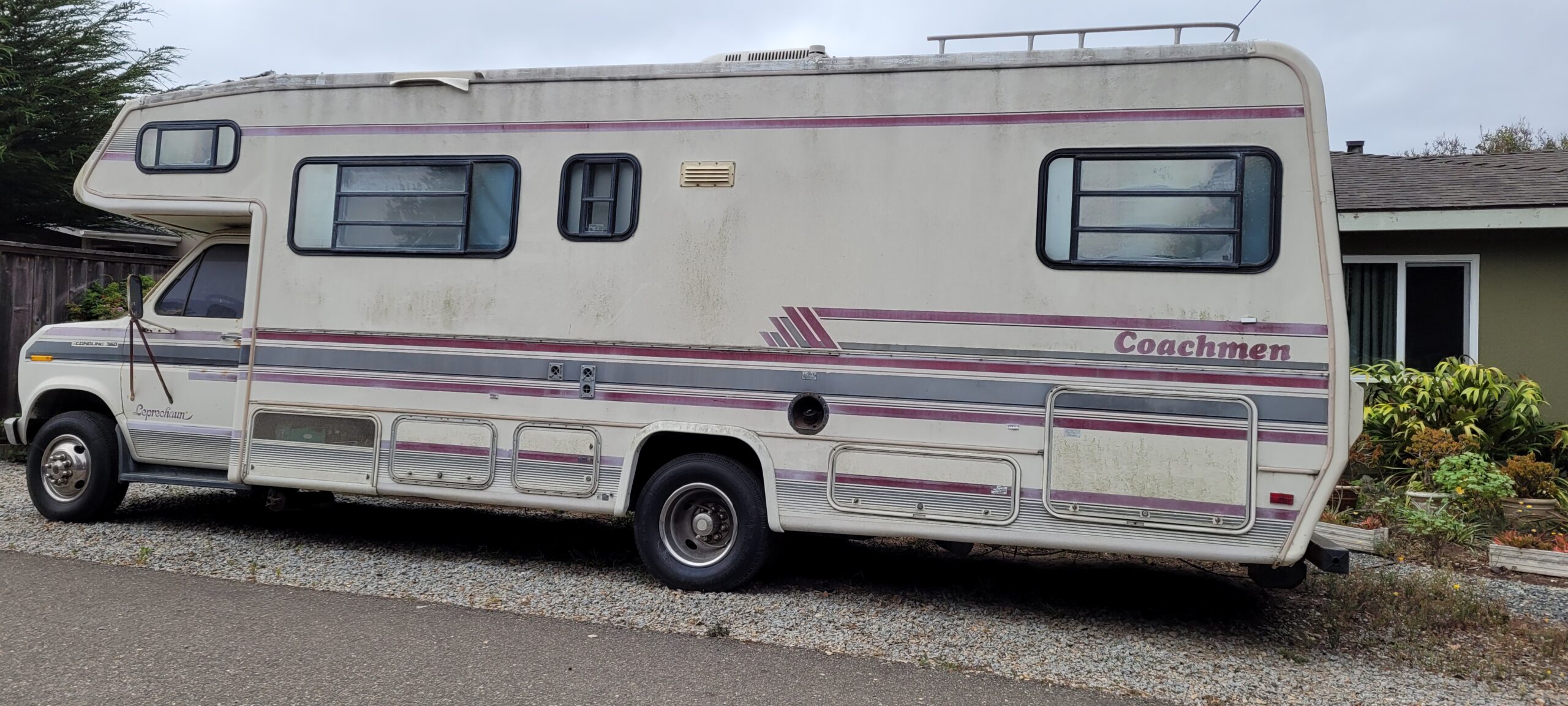
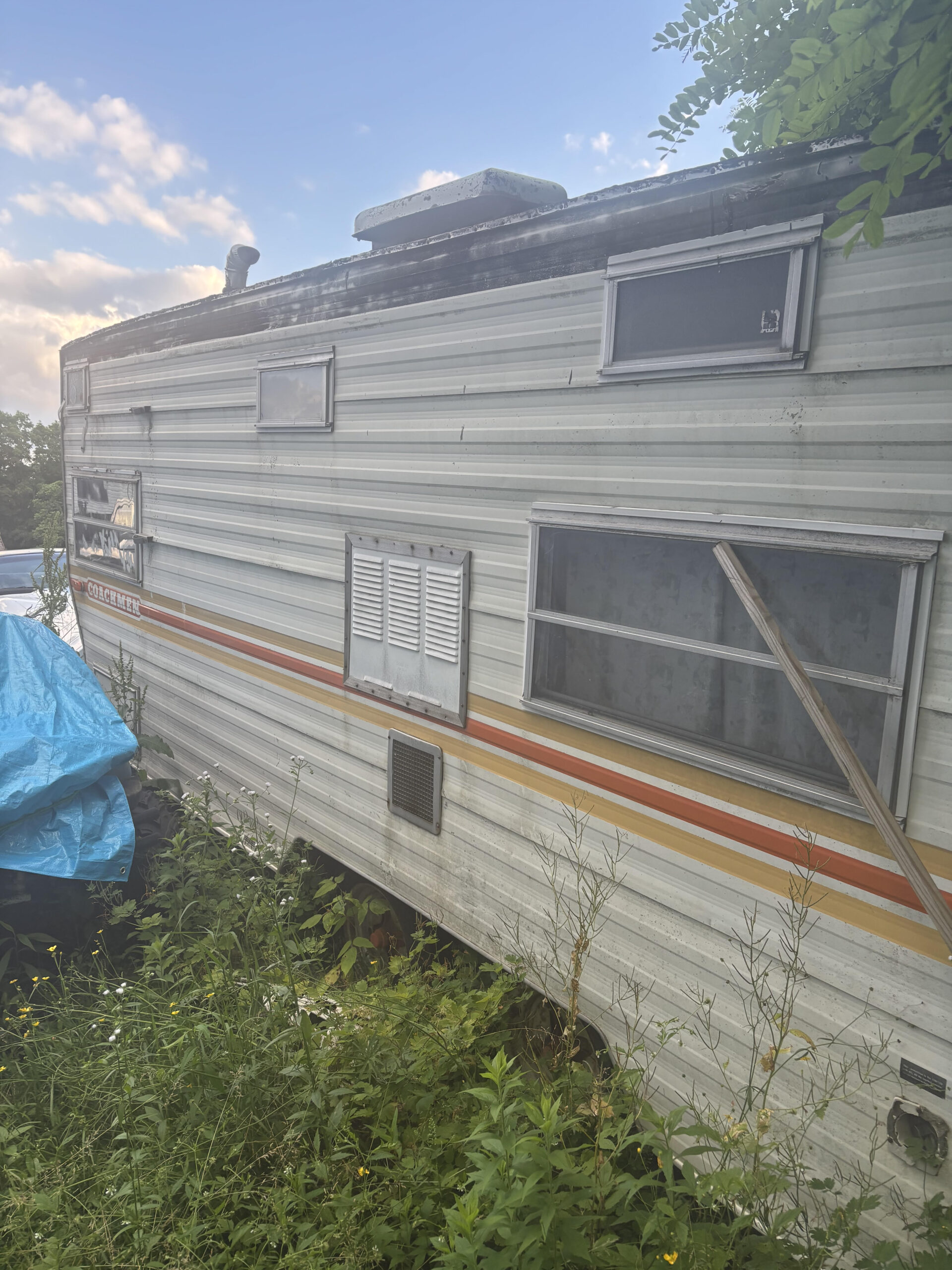
Coachmen at a glance
- Founded
- 1964, by brothers Tom, Keith and Claude Corson
- Headquarters
- Middlebury, Indiana
- Parent company
- Forest River, a Berkshire Hathaway company (since December 2008)
- Lines you may see
- Freedom Express and Catalina travel trailers, Coachmen Class C motorhomes, older truck campers and tent campers
A short history of Coachmen
Coachmen’s company page says its products have been on U.S. roads since 1964, when three brothers, Tom, Keith and Claude Corson, opened a 5,000-square-foot plant in downtown Middlebury, Indiana. Their first year of production, the company says, came to 12 travel trailers, a single truck camper and 80 truck caps.
By the time Forest River bought the assets of Coachmen RV in 2008, Wikipedia notes, the line covered Class A and Class C motorhomes, travel trailers, fifth wheels, tent campers and sport utility trailers. Coachmen’s own page dates the change to December 2008, when it “became a proud brand of Forest River, Inc., a Berkshire Hathaway company,” and still describes Middlebury as home.
How Coachmen campers are built
Coachmen’s lines are built in noticeably different ways. Its Freedom Express brochures describe an “Alumicage” of welded aluminum with vacuum-bonded Azdel composite sidewalls, which Coachmen says resist water, rot and mold. Its Catalina literature, by contrast, describes a cambered structural steel I-beam frame with aluminum exterior panels.
Older Coachmen trailers and Class C motorhomes vary by year. On a motorhome, the steel truck chassis is a separate structure under the coach. We sort the materials by what is actually in the unit: Azdel is a composite, not wood, so it is separated with the other wall layers rather than mixed with the metal.
Identifying a Coachmen before removal
Coachmen units usually show the Coachmen name on the side or front cap, along with a line name such as Freedom Express or Catalina. The data plate near the entry door gives the model year.
The 2008 move to Forest River is a rough dividing line. Units built after that are Forest River products, and their brochures describe either Azdel-and-aluminum walls or aluminum panels on a steel frame. Older Coachmen trailers and motorhomes predate that, so construction varies more. Close-up photos of the wall surface help us tell which kind you have.
What we recycle or salvage from a Coachmen
Coachmen units span decades and body styles, so the mix changes from job to job. Typical recovery:
- Steel: I-beam trailer frames, axles and hitches, or the full truck chassis on a Class C
- Aluminum: exterior panels on Catalina-style units, welded Alumicage framing on Freedom Express units
- Copper: house and chassis wiring and the shore cord
- Fiberglass and composite walls: front caps, fiberglass skins and Azdel panels, kept out of the metal stream
- Appliances: refrigerators, furnaces, water heaters and air units
- Engine parts on motorhomes: engine and transmission kept as parts when they run
- Tires, batteries and propane: tires reused or recycled, batteries recycled, propane bottles and tanks handled safely
From our newsroom: a Coachmen Class C recycling job and Coachmen travel trailer removals.
Before we quote
Send photos of the whole unit, the tires, the hitch or front end, and the path a truck would use. Tell us two things: can a truck back up to it, and do the tires hold air? Add the city or ZIP and whether you have the title.
Coachmen removal FAQs
Do you remove Coachmen Class C motorhomes?
Yes. We have removed Coachmen Class C units parked beside houses. Tell us whether it runs, whether it rolls, and whether you have the title.
Is Coachman the same as Coachmen?
Yes, people spell it both ways. The company name is Coachmen.
My Coachmen trailer is from the 1970s or 1980s. Will you still take it?
Yes. Older trailers are a regular part of our work. Show us the frame, tongue and tires in your photos.
How do I request a Coachmen removal quote?
Send photos, the city or ZIP and the length to [email protected], or call (855) 713-6280.
Where we work
We take jobs across the country. See camper removal near me for every state and city page, or browse all camper and RV manufacturers.
Related brands
Brand names are used only to describe the campers we remove. Remove My Camper is not affiliated with Coachmen, and the facts above come from public company histories, filings and news reports.