
Home · Camper & RV Manufacturers · Forest River
Remove My Camper, powered by Arwood Site Services
Forest River builds so many different campers that “it’s a Forest River” only narrows things down a little. A Flagstaff pop-up, a Wildwood bumper-pull and a Wildcat fifth wheel can all carry the name, and each comes apart differently.
We remove Forest River units of every size from yards, storage lots and parks, and we sort what is left for reuse or recycling. The badge on the side and a few photos are usually enough to tell us what we are dealing with.
Every removal is quoted after we see photos. Price depends on size, condition, access, and what can be reused or recycled, and we don’t promise free removal or payment for a unit.
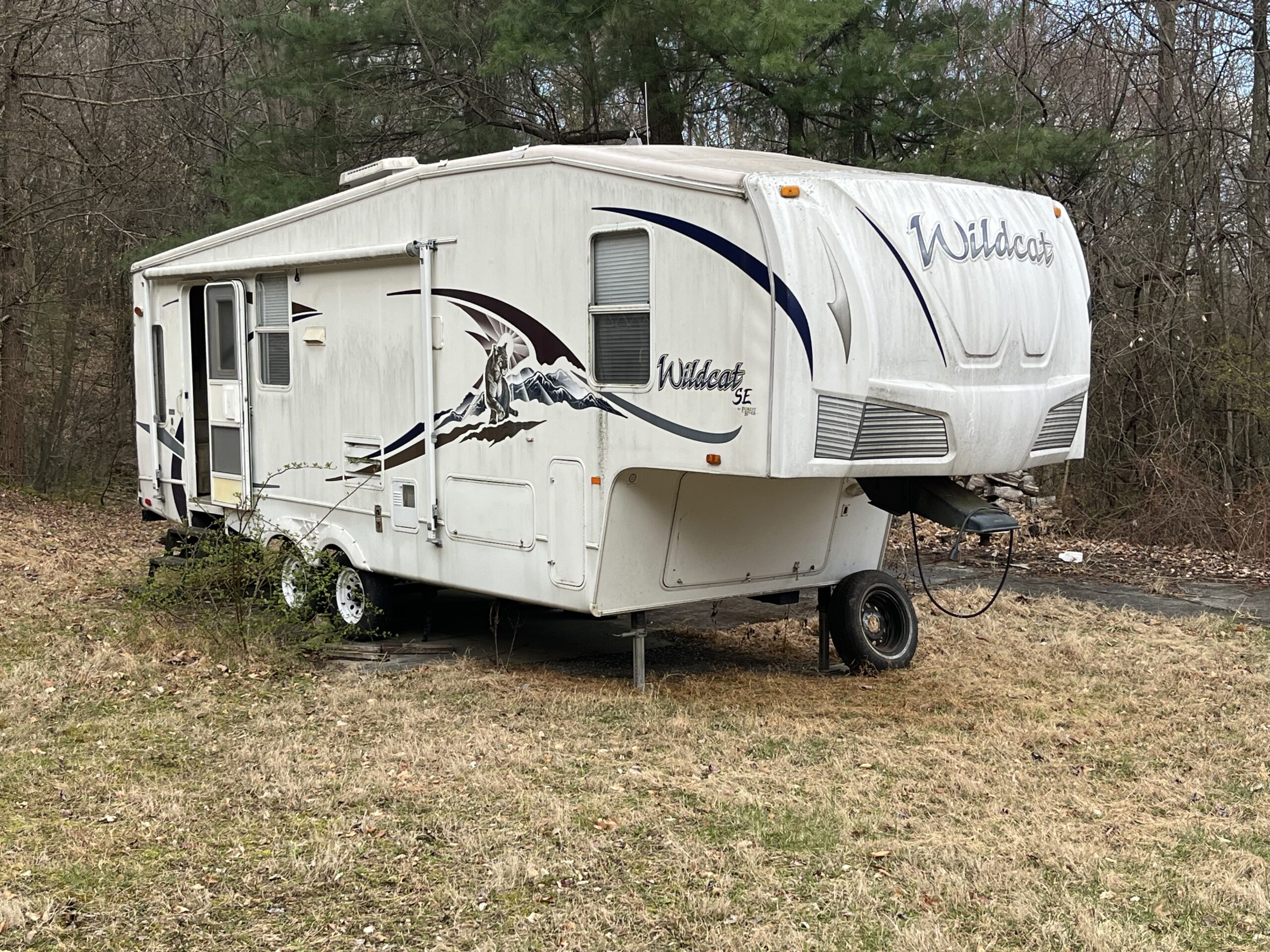
Forest River at a glance
- Founded
- 1996, by Pete Liegl
- Headquarters
- Elkhart, Indiana
- Parent company
- Berkshire Hathaway (since August 2005)
- Lines you may see
- Rockwood, Flagstaff, Salem, Wildwood, Wildcat, Sandpiper; sister divisions include Coachmen, Prime Time and Palomino
A short history of Forest River
Forest River says Pete Liegl founded the company in 1996. According to Wikipedia’s company history, he started by buying certain assets of Cobra Industries, where he had worked from 1985 to 1993. The first products were tent campers, travel trailers, fifth wheels and park models sold as Salem, Sierra, Sandpiper, Wildwood, Rockwood, Flagstaff, Summit and Quailridge.
Berkshire Hathaway announced on July 20, 2005 that it would buy Forest River from Liegl, and its quarterly filing records the purchase closing on August 31, 2005. Palomino had already joined in 2002. After the Berkshire sale came Coachmen RV’s assets in 2008, Prime Time Manufacturing (formed in 2009) and Dynamax in 2011. Forest River also builds buses, cargo trailers and pontoon boats.
Wikipedia lists the headquarters as Elkhart, Indiana. Forest River’s own pages say it builds Class A and C motorhomes, travel trailers, fifth wheels, toy haulers, camping trailers and destination trailers.
How Forest River campers are built
Construction depends on the line. Forest River’s Rockwood and Flagstaff brochures describe six-sided, aluminum-framed walls that are vacuum-bonded and laminated, with fiberglass exteriors. Many standard Salem and Wildwood models, by contrast, are described by sellers as wood-framed walls with aluminum siding, the older “stick and tin” style, although some upper trims switched to aluminum framing.
That difference matters at removal time. Corrugated aluminum siding over wood studs comes off in sheets; a laminated wall has to be cut so the aluminum frame can be separated from the foam and fiberglass. Under all of them sits a steel I-beam trailer frame, which is the most dependable metal on any Forest River towable.
Identifying a Forest River before removal
Forest River campers usually show the line name, such as Rockwood, Flagstaff, Salem, Wildwood or Wildcat, much larger than the Forest River name, which may appear only on a small decal or the data plate. If you only know the line name, that is enough for us.
A quick way to tell construction is to look at the side wall. Corrugated or ribbed aluminum siding points to a wood-framed, stick-and-tin build. A smooth, glossy wall usually means fiberglass, often laminated over aluminum. Photograph the wall close up as well as the whole unit, and include any decal near the door that shows the model year.
What we recycle or salvage from a Forest River
A Forest River towable usually gives up more metal than people expect, especially stick-and-tin units with aluminum siding. Typical recovery:
- Aluminum siding and framing: sheets from stick-and-tin walls, tubing from laminated walls
- Steel I-beam frame: the frame, axles, springs and hitch go to scrap metal
- Copper wire: pulled from the electrical system and the shore cord
- Fiberglass: front caps and laminated skins are separated from the metal
- Appliances: refrigerators, ranges, water heaters and roof air units, reused where they still run
- Tires: reused if they are safe, otherwise recycled
- Propane and batteries: propane bottles are shut off and handled safely; batteries go to a battery recycler
From our newsroom: a Wildcat SE fifth-wheel removal and Flagstaff pop-up removals.
Before we quote
Send photos of the whole unit, the tires, the hitch or front end, and the path a truck would use. Tell us two things: can a truck back up to it, and do the tires hold air? Add the city or ZIP and whether you have the title.
Forest River removal FAQs
Do you take Forest River pop-ups like the Flagstaff and Rockwood tent campers?
Yes. Folding campers are some of the quickest jobs we do, as long as a truck can get close. Send a photo with the unit folded down and one of the tongue.
Can you remove a Wildwood or Salem that has been parked for years?
Yes. Long-parked units with sunk tires or brush around them are common. Show us the tires and the ground around the unit so we can plan the right equipment.
Is Coachmen part of Forest River?
Coachmen RV became a Forest River brand in December 2008. It has its own page, linked below, because its history starts in 1964.
How is a Forest River removal priced?
By size, condition, access, and what can be reused or recycled. Send photos to [email protected] or call (855) 713-6280, and the quote comes after we see them.
Where we work
We take jobs across the country. See camper removal near me for every state and city page, or browse all camper and RV manufacturers.
Related brands
Brand names are used only to describe the campers we remove. Remove My Camper is not affiliated with Forest River, and the facts above come from public company histories, filings and news reports.