
Home · Camper & RV Manufacturers
Remove My Camper, powered by Arwood Site Services
Most campers in driveways, storage lots and parks were built by a small group of companies, many of them in northern Indiana. Knowing who built yours tells us a lot about how it is put together, and so about what can be reused or recycled when it leaves your property.
Below are the brands we hear about most, with a short history of each, how their campers are typically built, and what we recover from them. Remove My Camper removes pop-ups, travel trailers, fifth wheels, truck campers and Class A, B and C motorhomes from all of these makers, running or not.
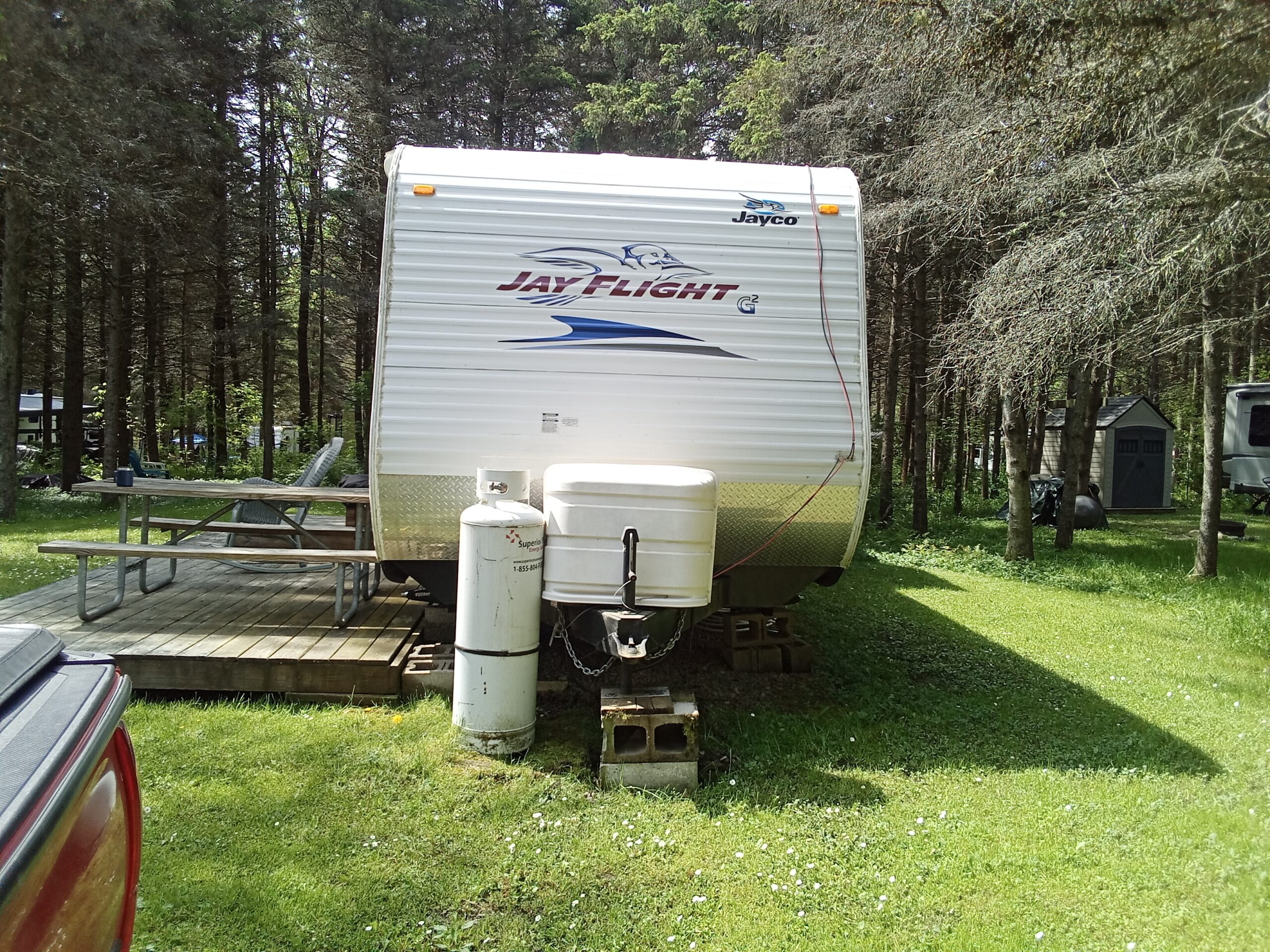
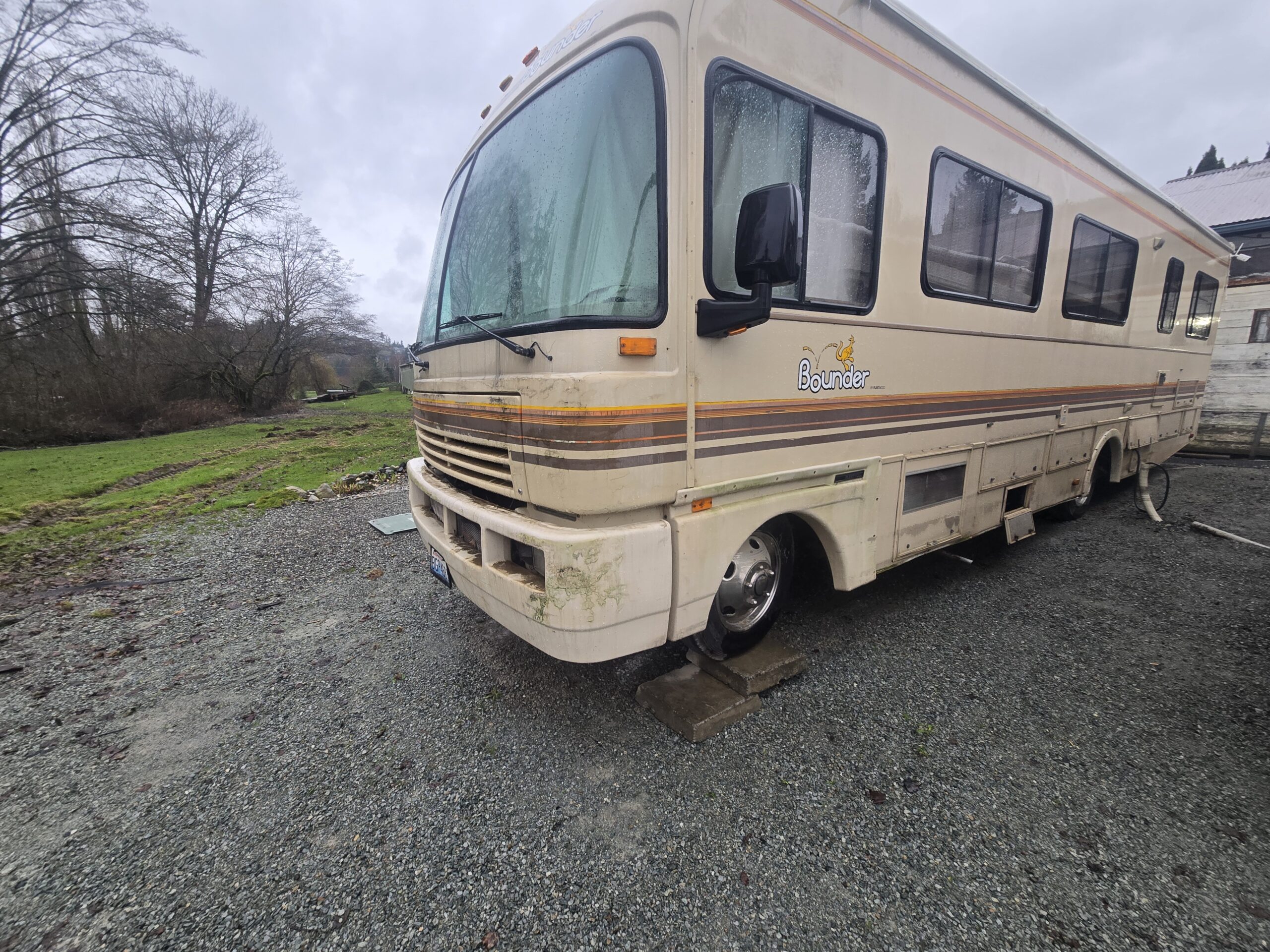
How construction changes what we recycle
Two campers of the same size can come apart very differently. What decides it is mostly how the walls and frame were built:
- Wood-framed walls with aluminum siding (often called stick and tin) come apart in layers. The aluminum sheets peel off and the wood framing is separated out.
- Laminated walls bond a welded aluminum frame, foam insulation and a fiberglass or composite skin together under pressure. They have to be cut in sections so the aluminum can be pulled free.
- Riveted aluminum shells, like an Airstream, are almost all aluminum and sit on a separate steel chassis.
- Motorhomes add a full truck or bus chassis with an engine, transmission, fluids and often a generator.
Almost every towable rides on a steel frame, and almost every camper has copper wiring, appliances, tires, a battery and propane bottles or a tank. Batteries and propane come out first and are handled safely; fluids on motorhomes are drained properly. If a camper or its parts can be reused, we reuse them. If not, we recycle what we can.
Brands we remove, by company
THOR Industries brands
THOR began in 1980 with the purchase of Airstream and grew into the parent of many of the towables and motorhomes we remove.
- THOR Industries — Parent of Airstream, Jayco, Keystone and more since 1980, and the name on Thor Motor Coach motorhomes. Four Winds Class C units pair a Ford chassis with a welded aluminum cage.
- Airstream — The 1931 Los Angeles original, now built in Jackson Center, Ohio. A riveted aluminum shell bolted to a steel chassis means we check for reuse before anything is cut.
- Jayco — Northern Indiana builder founded in 1968, now owned by THOR. We see everything from old Jayco pop-ups to Jay Flight travel trailers with aluminum-framed laminated walls.
- Starcraft — A Goshen company dating to 1903 that began building tent campers in 1964; part of Jayco since 1991. Old Starcraft pop-ups still turn up in a lot of yards.
- Keystone — Goshen, Indiana builder founded in 1996 and owned by THOR since 2001. Montana and Cougar fifth wheels use welded aluminum framing inside laminated fiberglass walls.
- Dutchmen — Goshen, Indiana builder founded in 1988 and part of THOR since 1991. Aspen Trails use metal siding on wood frames; Kodiaks use fiberglass on welded aluminum.
- Heartland — Founded in 2003, bought by THOR in 2010 and placed under Jayco in 2025. Bighorn fifth wheels use laminated walls on a double-welded aluminum structure.
- Tiffin — Red Bay, Alabama, family company since 1972 and part of THOR since 2020. Allegro coaches use laminated walls with a tubular aluminum skeleton on a steel chassis.
Winnebago Industries brands
Winnebago Industries added Grand Design in 2016 and Newmar in 2019, so its family runs from Class C motorhomes to fifth wheels to diesel coaches.
- Winnebago — The Iowa motorhome maker behind the Minnie Winnie. Thermo-Panel walls of fiberglass, foam and welded aluminum sit on a steel truck chassis, so there is a full drivetrain to deal with.
- Grand Design — Founded in 2012 and owned by Winnebago since 2016, so every unit is fairly new. Solitude and Reflection fifth wheels use laminated walls and several slide-outs.
- Newmar — Nappanee, Indiana, since 1968; part of Winnebago since 2019. Its Dutch Star coaches pair aluminum-framed, fiberglass-skinned walls with a Freightliner diesel chassis.
Forest River brands (Berkshire Hathaway)
Forest River has been a Berkshire Hathaway company since 2005 and runs several divisions with their own names and plants.
- Forest River — Founded in 1996 and owned by Berkshire Hathaway since 2005. Its lines run from aluminum-framed laminated Rockwoods to stick-and-tin Wildwoods, so the badge tells us a lot about the teardown.
- Coachmen — Middlebury, Indiana, since 1964 and part of Forest River since 2008. Freedom Express trailers use Azdel composite walls on welded aluminum; Catalina uses aluminum panels on a steel frame.
- Prime Time — A Forest River division formed in 2009 in Wakarusa, Indiana. Tracers use laminated aluminum framing; Avengers use conventional walls with an aluminum skin.
- Palomino — Started as a Minnesota pop-up maker in 1968, now a Forest River division in Colon, Michigan. Backpack truck campers use a welded aluminum superstructure.
REV Group, licensed and independent brands
Fleetwood RV now belongs to REV Group, Coleman campers were built under license by several companies, and Gulf Stream is still family-owned.
- Fleetwood RV — A 1950 California company that built everything from Bounders to Coleman pop-ups; now part of REV Group. Its towables ended in 2009, so Fleetwood trailers are older units.
- Coleman — Coleman's own camping-trailer division started building folding campers in 1967. Later Colemans were built under license by Fleetwood, FTCA and Dutchmen.
- Gulf Stream Coach — A Shea family company in Nappanee, Indiana, since 1983 and still independent. Conquest Class C units add a tubular steel floor frame under laminated walls.
Don’t see your brand?
We remove campers from every maker, including brands no longer in business. If yours isn’t listed, send photos of the unit and any badge or VIN plate you can find, and we will take it from there. The cost calculator gives a labeled estimate before you call.
Every removal is quoted after we see photos. Price depends on size, condition, access, and what can be reused or recycled, and we don’t promise free removal or payment for a unit.
Manufacturer FAQs
Does the brand change the price of removal?
Not by itself. Size, condition, access and what can be reused or recycled matter more. The brand helps us understand how the unit is built.
How do I find out who made my camper?
Look for a badge on the sides or rear, a decal near the entry door, or a VIN or data plate, often near the front left corner or inside a cabinet. Photograph whatever you find.
Do you remove motorhomes as well as trailers?
Yes. We remove Class A, B and C motorhomes and truck campers as well as pop-ups, travel trailers and fifth wheels.
How do I get a quote?
Call (855) 713-6280 or email [email protected] with photos, the city or ZIP, and whether a truck can back up to the unit and the tires hold air.
Where we work
See camper removal near me for every state and city page.
Brand names are used only to describe the campers we remove. Remove My Camper is not affiliated with any manufacturer listed here.